Duolingo Won’t Make You Speak — Here’s What Will

Five hundred days. Maybe more. You kept the streak alive through holidays, flights and bad weeks. You know hundreds of words, you clear the lessons, the app says you’re doing great. Then you land abroad, someone asks you a simple question — and nothing comes out.
If you can’t speak after Duolingo, that’s not a failure on your part, and it’s not proof the app is bad. It’s the predictable result of training one skill and expecting a different one to appear.
Let’s be fair first: Duolingo is genuinely good at what it’s designed for. It got you into a daily habit, taught you vocabulary and grammar patterns, and kept you learning when motivation dropped. That’s not nothing — most people who start a language quit in week two.
But there’s a gap it was never built to close. And that gap is exactly the thing you actually want.
Tapping isn’t talking
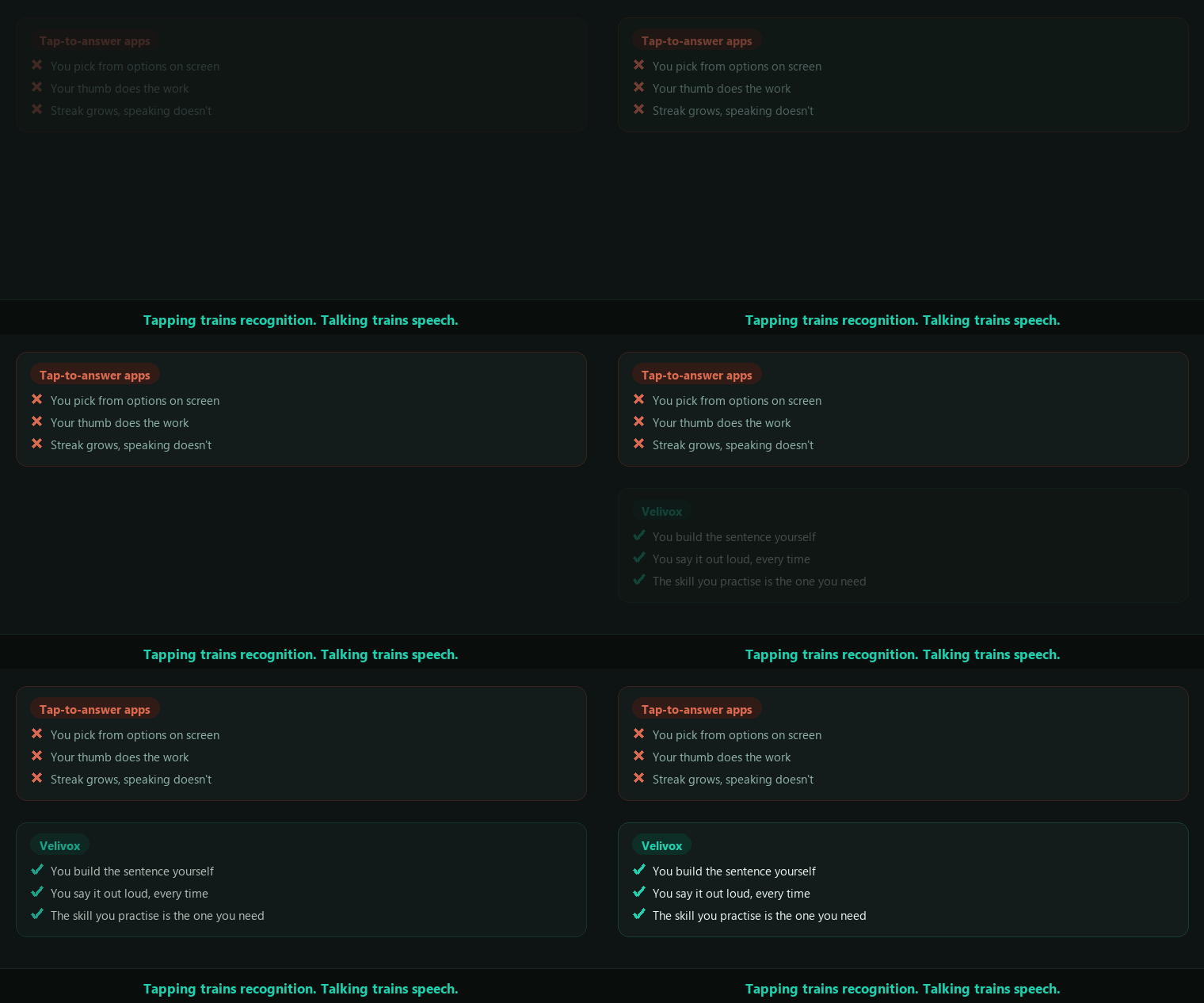
Look closely at what you physically do in a tap-to-answer app: you read options, you recognise the right one, you touch the screen. Repeat a few thousand times.
Now look at what a real conversation demands: retrieve words from memory with no options on screen, build a sentence yourself, control your mouth to produce the sounds, do it in real time while a person waits, and understand what comes back at natural speed.
These share almost nothing. One trains recognition — spotting the correct answer among choices. The other trains production — creating language from scratch. Your brain gets very good at whatever you actually practise, and it doesn’t generously transfer the skill next door.
That’s the whole mystery behind “I know so many words but I freeze”: recognising a word and retrieving it under pressure are two different abilities.
Why the streak feels like progress
Streaks, XP and level-ups are excellent motivation design. They’re also a measure of consistency, not of speaking ability. Nothing in that number tracks whether you can hold a two-minute conversation.
So the feedback you get every day says “you’re winning,” while the skill you actually care about stays where it was. The disappointment doesn’t hit until real life tests you — at the airport, on a call, in an interview.
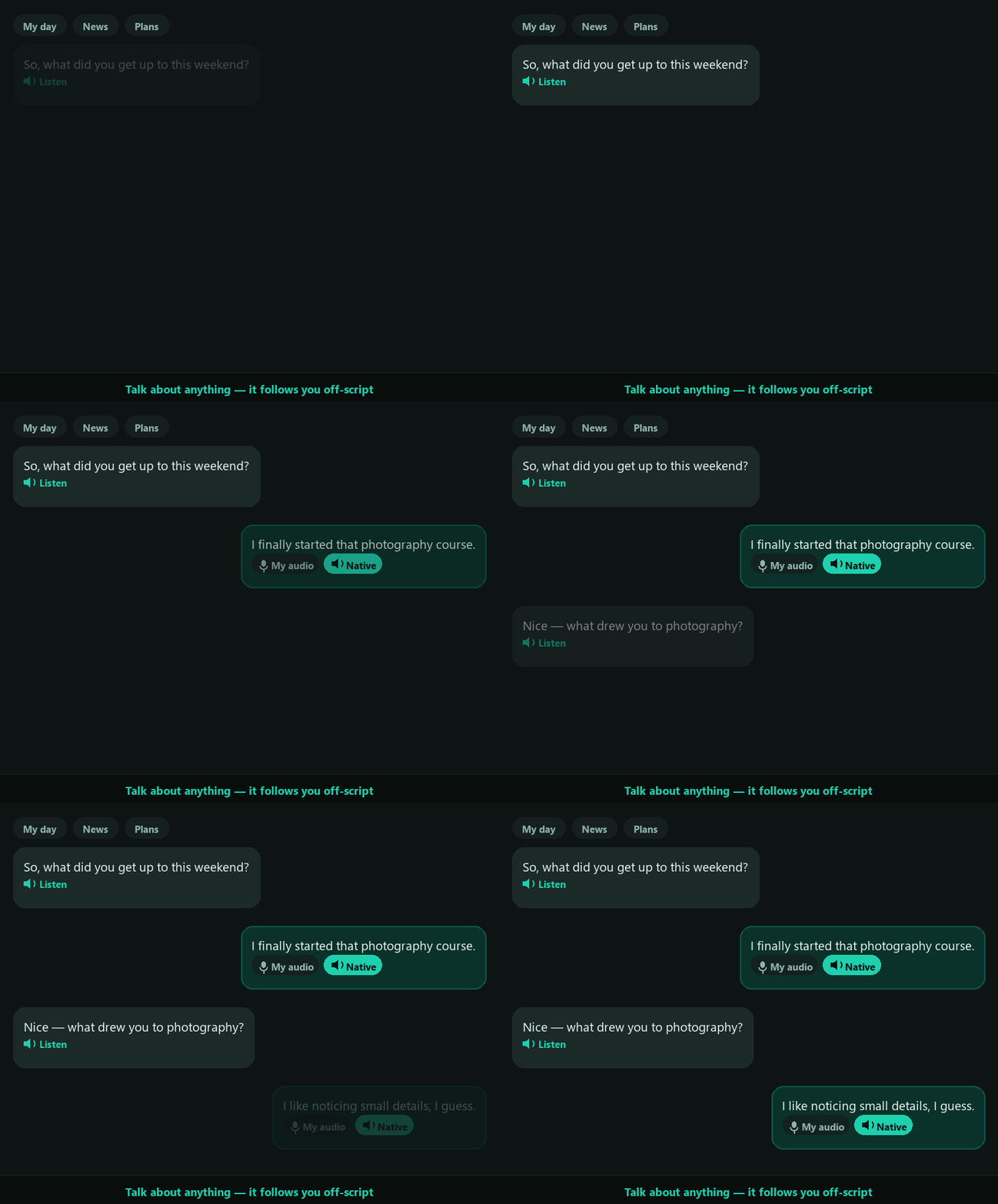
The scripted speaking exercises some apps include don’t close it either: they give you one correct sentence to repeat. Real conversation is unpredictable — the moment you go off-script, there’s nothing there.
What actually builds speaking
Speaking is a motor skill with a memory-retrieval problem attached. Skills like that improve one way: doing the real thing, often, under conditions close enough to reality — with the pressure low enough that you keep going.
1. Produce language, don’t select it
No options on screen. You build the sentence and say it out loud, even badly. That single change is the difference between practising recognition and practising speech.
2. Make it unpredictable
Scripts train scripts. Real conversation goes wherever it wants — a follow-up question you didn’t expect, a topic change, an opinion you have to defend. Practising unpredictability is what makes real conversations stop feeling like ambushes.
3. Keep it real-time
The freeze lives in the pause between hearing and answering. You can only shrink that gap by rehearsing it: hear something, respond now, keep it moving.
4. Remove the fear
Most people avoid speaking because a mistake in front of a human feels expensive. Practise where mistakes cost nothing and you’ll make hundreds of them — which is exactly how you stop making them.
Keep the habit, change the reps
Here’s the good news: the hardest part is already done. Building a daily language habit is what defeats most learners, and you’ve proven you can do it. You don’t need to start over — you need to point that habit at the missing skill.
Ten minutes of actual talking a day does more for fluency than an hour of tapping, because it trains the exact thing that fails you in real life. Keep learning words wherever you like. Just add the part where you say them out loud to someone.
That’s what Velivox is for — an AI English tutor you actually talk to. No multiple choice, no script: you speak, it understands and replies in a natural human voice in real time, and it gently corrects you in your own language. Nobody is watching, nothing is graded, and you can make as many mistakes as you need. It’s daily speaking practice for the price of a fraction of one tutor lesson.
Can’t speak after Duolingo: the short version
- Tap-to-answer apps train recognition; conversation needs production — different skills.
- A streak measures consistency, not speaking ability.
- Scripted speaking drills collapse the moment a real conversation goes off-script.
- Fix it by speaking out loud daily — unscripted, real-time, judgment-free.
You already built the habit. Now point it at speaking — 10 minutes a day, judgment-free.
Free to start · No account · Android & iOS