Why You Freeze When Speaking English (And How to Fix It)
You’ve studied for years. You read articles, you follow movies, you understand almost everything you hear. Then someone asks you a simple question in English — and your mind goes completely blank. If you keep asking yourself “why can’t I speak English even though I understand it?”, you’re not broken, and you’re definitely not alone.
That moment — when the words are somewhere in your head but nothing comes out — is what most learners mean when they say they freeze when speaking English. The good news: it’s not a knowledge problem, and once you understand what’s actually happening, the fix is surprisingly simple.
What “freezing” really is
Freezing feels like forgetting. It isn’t. The words are still there — you’d recognise every one of them on a page. What fails in the moment is retrieval under pressure: pulling the right words out, assembling them into a sentence, and moving your mouth to say them — all in real time, while someone is waiting.
That’s a completely different skill from understanding. And it’s the reason you can ace a grammar test on Monday and still freeze ordering coffee on Saturday.
The real reason: speaking is a separate skill
Language has two sides. Input — reading and listening — is what most study builds. Output — speaking and writing — is a different muscle entirely. Years of courses, apps and shows pour into input. Output barely gets trained.
So your comprehension races ahead while your speaking stays a beginner. The gap between “I understand this perfectly” and “I can’t say it” is the freeze. It’s not a sign you need more English — it’s a sign you need more speaking.
Why more grammar and vocabulary won’t fix it
This is the trap almost everyone falls into: “I froze, so I must not know enough — I’ll learn more words, review more grammar.” But you already understood the conversation. Adding input to an output problem is like reading more about swimming to stop sinking. You don’t need more theory. You need reps in the water.
Tapping multiple-choice answers in an app feels productive, but it trains recognition, not speech. That’s why people finish a 500-day streak and still freeze — tapping isn’t talking.
How to actually fix the freeze
The freeze melts the same way any motor skill smooths out: repetition, in realistic conditions, with the pressure turned down. Four things do the heavy lifting.
1. Speak out loud — every day
Thinking a sentence and saying it are not the same. Real fluency comes from moving your mouth. Even 10 minutes of actual talking a day rewires retrieval far faster than an hour of silent review.
2. Lower the stakes
Most freezing is fear: fear of sounding stupid in front of a real person. Remove the audience and the fear collapses. Practise where a mistake costs nothing — no one watching, no one judging — and your brain stops bracing for embarrassment.
3. Get real-time back-and-forth
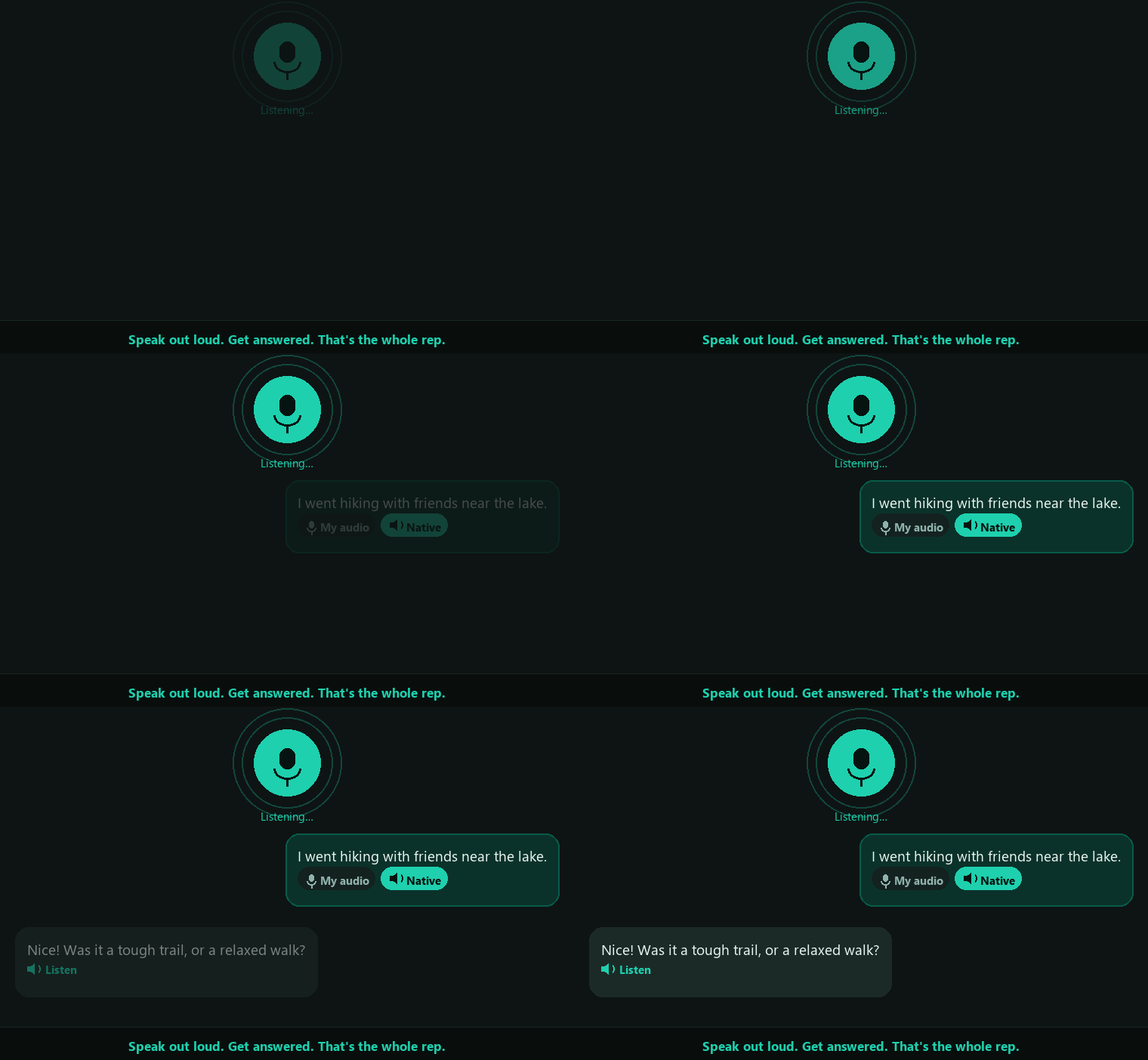
Freezing happens in the gap between hearing and answering. The only way to train that gap is to practise it: hear something, respond right away, keep the conversation moving. Flashcards can’t recreate that. A real exchange can.
4. Make your mistakes safely
You need to make hundreds of small mistakes to stop making them — but somewhere they don’t cost you anything. Gentle correction, in your own language, turns each stumble into a rep instead of a scar.
A simple daily routine that melts the freeze
You don’t need an hour or a tutor. You need consistent, low-pressure speaking reps. Here’s a routine anyone can keep:
- 10 minutes a day. Short and daily beats long and rare — speaking is a habit, not a cram.
- Talk about anything. Your day, your plans, a random opinion. The topic doesn’t matter; the reps do.
- Let yourself freeze. Pause, restart, say it wrong. Each recovery makes the next freeze smaller.
- Hear the natural version. After you speak, listen to the smooth way to say it — then say it again.
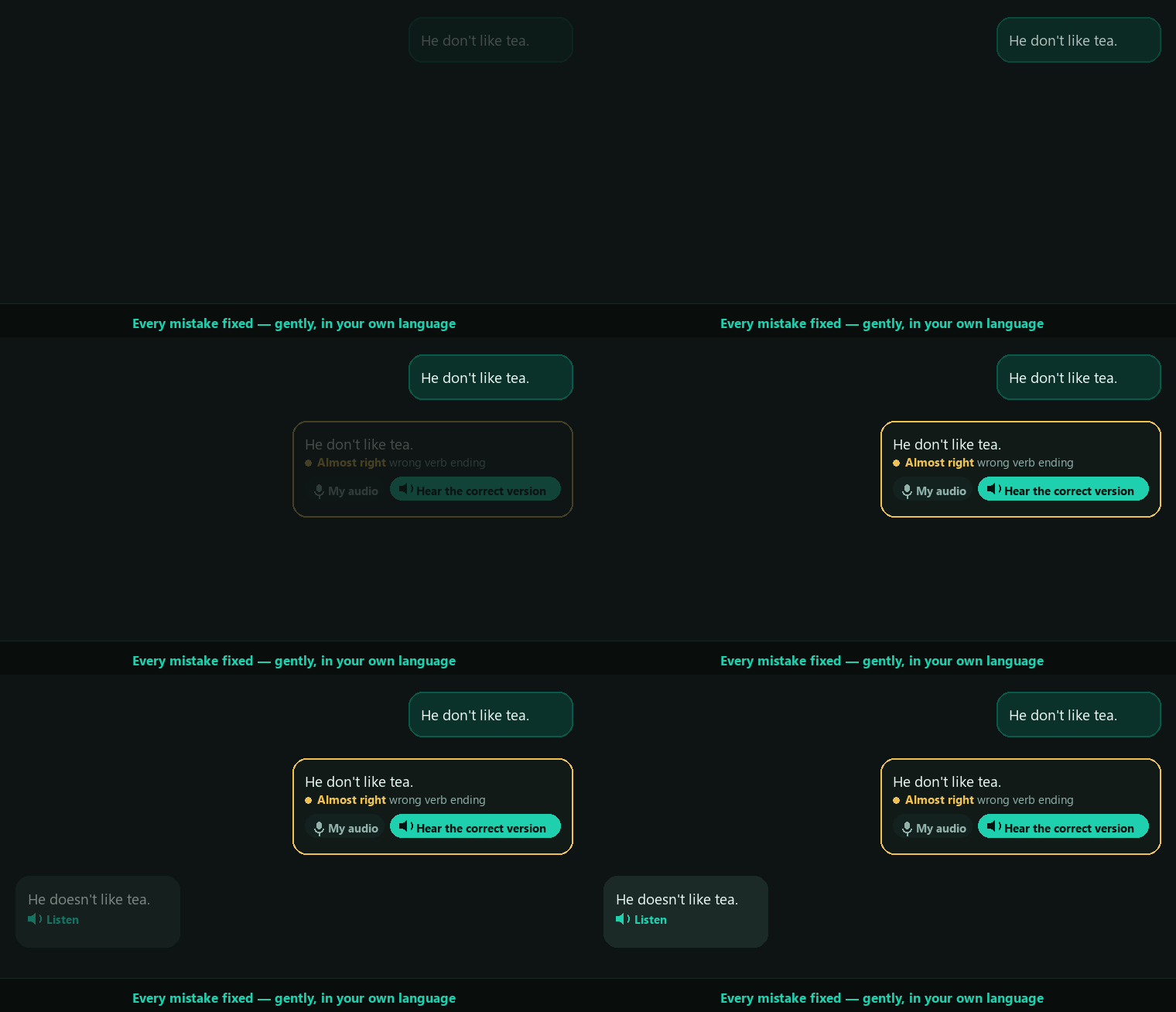
This is exactly what Velivox was built for — an AI English tutor you actually talk to. You speak out loud, it replies in a natural voice in real time, and it gently corrects you in your own language, with zero judgment. It’s the safe, daily speaking practice that trains the one skill that freezes — for less than a single tutor lesson a month, available 24/7.
Why you freeze when speaking English: the short version
- Freezing is a retrieval-under-pressure problem, not a knowledge problem.
- Speaking is separate output skill — years of input never trained it.
- More grammar and vocabulary won’t help; speaking reps will.
- Fix it with daily, low-pressure, real-time talking — where mistakes are safe.
Stop freezing. Start speaking today — with an AI tutor that talks back, judgment-free.
Free to start · No account · Android & iOS