No One to Practice English With? Here’s What Actually Works
Every piece of language advice ends the same way: “just practise speaking!” Great. With whom, exactly?
You don’t know any native speakers. Your friends speak your language. Language-exchange partners vanish after two messages. A tutor costs $25–40 an hour, which makes daily practice impossible. So you keep learning words and never say them to anyone.
Here’s the honest version: you can practice speaking English alone, and some methods work far better than others. Below is every real option, what each one actually trains, and where it falls short.
First: what “practice” has to include
Before comparing methods, know what you’re grading them on. Useful speaking practice needs three ingredients:
- Production — you build sentences yourself and say them out loud.
- Response — something comes back, so you practise the pressure of replying in real time.
- Feedback — you find out what was wrong, or mistakes fossilise.
Most solo methods deliver one or two of these. Very few deliver all three — and that’s exactly why progress stalls.
1. Talk to yourself (yes, really)
Narrate what you’re doing, describe your day, argue with an imaginary colleague. It’s free, available instantly, and genuinely better than nothing — it gets your mouth moving and builds the habit.
Delivers: production. Missing: response and feedback. You never face the pressure of a reply, and you’ll happily repeat the same mistake for a year without knowing.
2. Record yourself and listen back
Speak for two minutes on any topic, then play it back. Uncomfortable at first, and surprisingly effective: you’ll catch hesitations, filler words and pronunciation you never notice in the moment.
Delivers: production, plus partial self-feedback. Missing: real-time response, and you can only catch mistakes you already know are mistakes.
3. Shadowing (repeat after native audio)
Play a clip of natural speech and repeat it a beat behind the speaker, copying rhythm and intonation. It’s one of the best things you can do for pronunciation and flow — your mouth learns the shapes of the language.
Delivers: pronunciation, rhythm. Missing: you’re copying, not composing. It won’t help you produce your own sentences under pressure.
4. Language exchange apps
Match with someone learning your language and swap. When it works, it’s wonderful — a real human, free, culturally interesting.
The reality: most conversations die within days. Time zones, mismatched levels, awkward silences, and the constant small negotiation of “is it my turn to help you now?” Many exchanges also drift into text, which trains writing instead of speaking. Worth trying — just don’t build your routine on it.
5. Tutors and conversation clubs
The gold standard for quality: a real person, real feedback, real accountability. If you can afford it, a weekly tutor is excellent.
The limit is frequency. At $25–40 an hour, most people manage once a week — and once a week isn’t how motor skills consolidate. Group clubs are cheaper, but you might speak for four minutes in a ninety-minute session, and the anxiety of speaking in front of a group keeps many people silent.
6. AI conversation practice
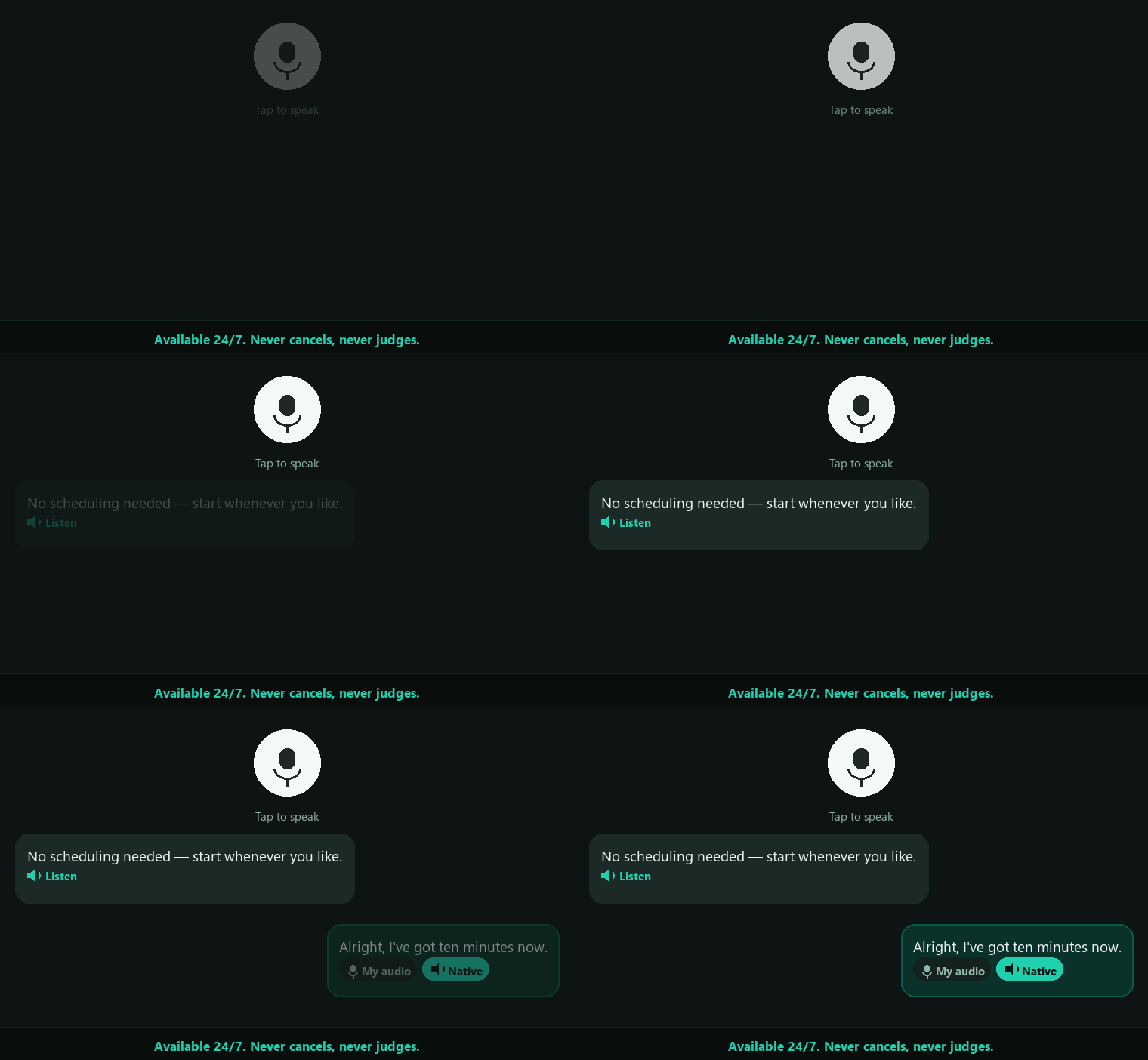
This is the option that didn’t exist a few years ago, and it’s the only solo method that delivers all three ingredients at once: you produce sentences out loud, you get a response in real time, and you get feedback on what to fix.
It also solves the two problems that kill every other approach — availability and cost. No partner to coordinate with, no hourly rate, so daily practice becomes realistic instead of aspirational.
The honest caveat: it isn’t a human, and it doesn’t replace real conversation with real people. What it does is get you ready for those conversations, by giving you the hundreds of reps you can’t get anywhere else.
The routine that actually works
You don’t have to pick just one. The strongest solo setup combines them:
- Daily (10 min): real conversation practice out loud — AI, or a human if you’re lucky enough to have one.
- A few times a week (5 min): shadowing, to sharpen pronunciation and rhythm.
- Occasionally: record yourself and listen back, to catch what you’d otherwise miss.
- When you can: a real human conversation — the exam your practice was preparing you for.
The non-negotiable is the daily line. Everything else is a bonus.
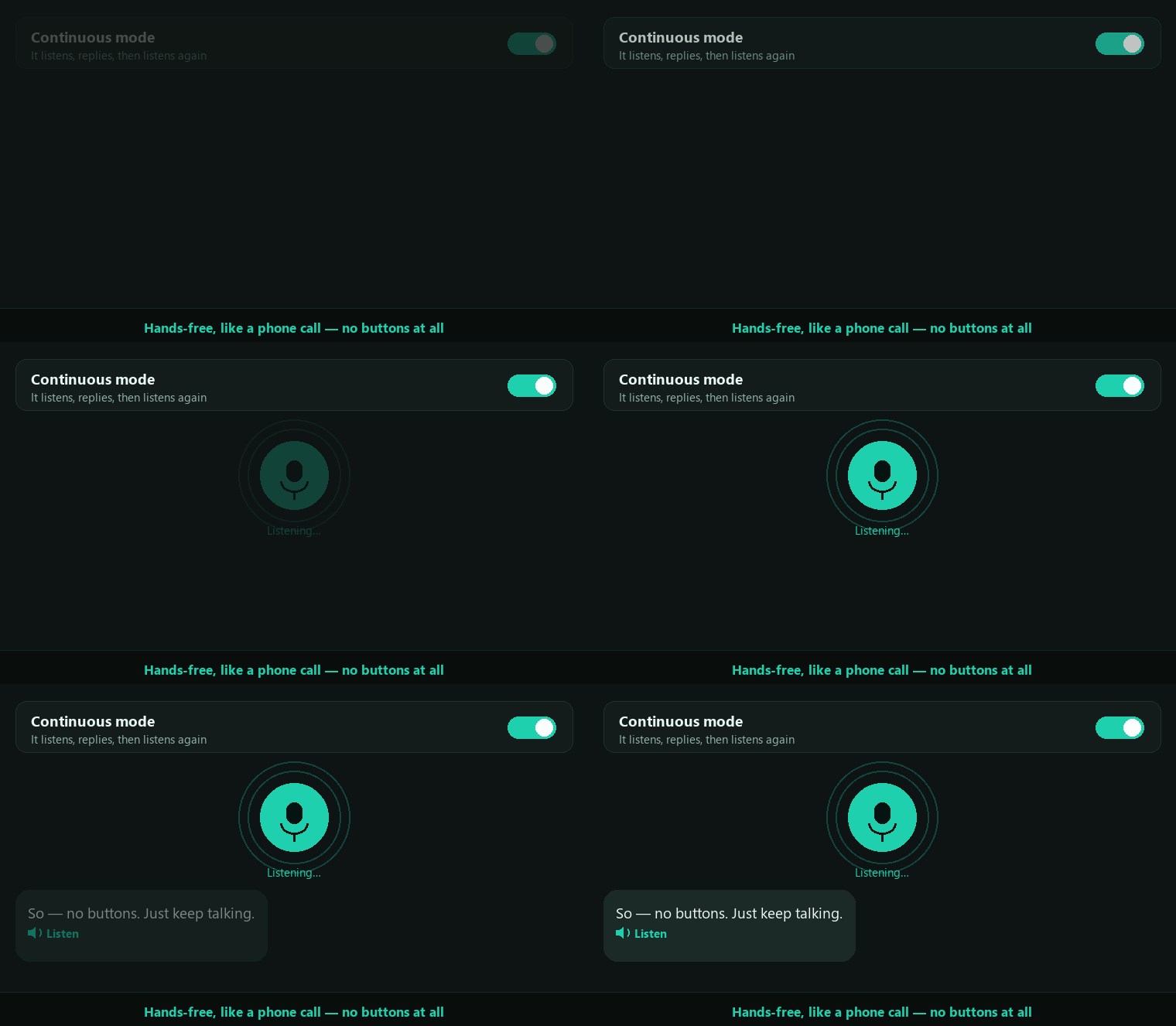
If you want the daily line handled, that’s what Velivox does: you speak out loud, it replies in a natural voice in real time, and it corrects you gently in your own language. It never cancels, never gets bored, and costs less per month than a single tutor lesson — which is the only way “daily” ever becomes realistic.
Practising English alone: the short version
- Good practice needs three things: production, response, feedback. Most solo methods give one.
- Self-talk and shadowing help, but never train replying under pressure.
- Exchange partners fade; tutors work but are too expensive to do daily.
- Daily is the variable that matters most — pick whatever method you can actually do every day.
Stop waiting for a partner. Have your first real conversation in the next ten minutes.
Free to start · No account · Android & iOS