
How to Keep Your English From Getting Rusty

There was a time when English just came out. You lived abroad, or worked in an English-speaking team, or studied there — and you didn’t think about sentences, you just spoke them.
Then life changed. You moved home, changed jobs, or your team switched to your native language. Now English mostly happens in writing: emails, documentation, subtitles. And on the rare call where you have to actually speak it, something is off. You hesitate. You reach for a word you definitely used to know. You hear yourself being slower than you remember.
If your English is getting rusty, that’s not decline and it’s not age. It’s disuse — and it’s one of the most reversible problems in language learning, if you know which part is actually rusting.
What actually goes rusty (and what doesn’t)
Here’s the reassuring part: you haven’t lost the language. Grammar, vocabulary and comprehension are remarkably durable — you can still read an article, follow a series, understand almost everything you hear.
What degrades is much narrower and much faster:
- Retrieval speed. The word is still there — it just takes two seconds to arrive instead of arriving instantly. In a live conversation, two seconds is an eternity.
- Automaticity. You start assembling sentences consciously again, the way you did years ago. It’s exhausting and it shows as hesitation.
- Mouth fluency. Speaking is physical. Muscles that haven’t shaped English sounds in months get clumsy — it feels like your tongue is a beat behind your brain.
- Ear for fast speech. Subtitles quietly hide this one. You follow a fast native conversation less easily than you used to.
Notice that none of these are knowledge. They’re all access — how quickly and smoothly you can get to what you already have. Which is why “revise your grammar” is the wrong prescription entirely.
Why “I use English at work” isn’t enough
Plenty of people are surprised by the rust because they feel like they use English constantly. And they do — in writing.
Writing lets you pause, edit, look things up and take thirty seconds on one sentence. It keeps your vocabulary alive but it never trains retrieval under time pressure. Reading and watching are the same: they’re input, and input doesn’t maintain output.
That’s why someone can write flawless English all week and still stumble through a fifteen-minute call. Speaking is maintained by speaking. Nothing else substitutes.
The good news: maintenance is cheap
Building fluency is expensive — years of study and immersion. Keeping it is almost nothing by comparison. The infrastructure is already in your head; you’re just keeping the paths open.
Ten minutes of real conversation a day is enough for most people to stay sharp. And the reverse is worth knowing too: a few weeks of speaking regularly usually brings back most of what feels lost. Rust comes off much faster than it went on.
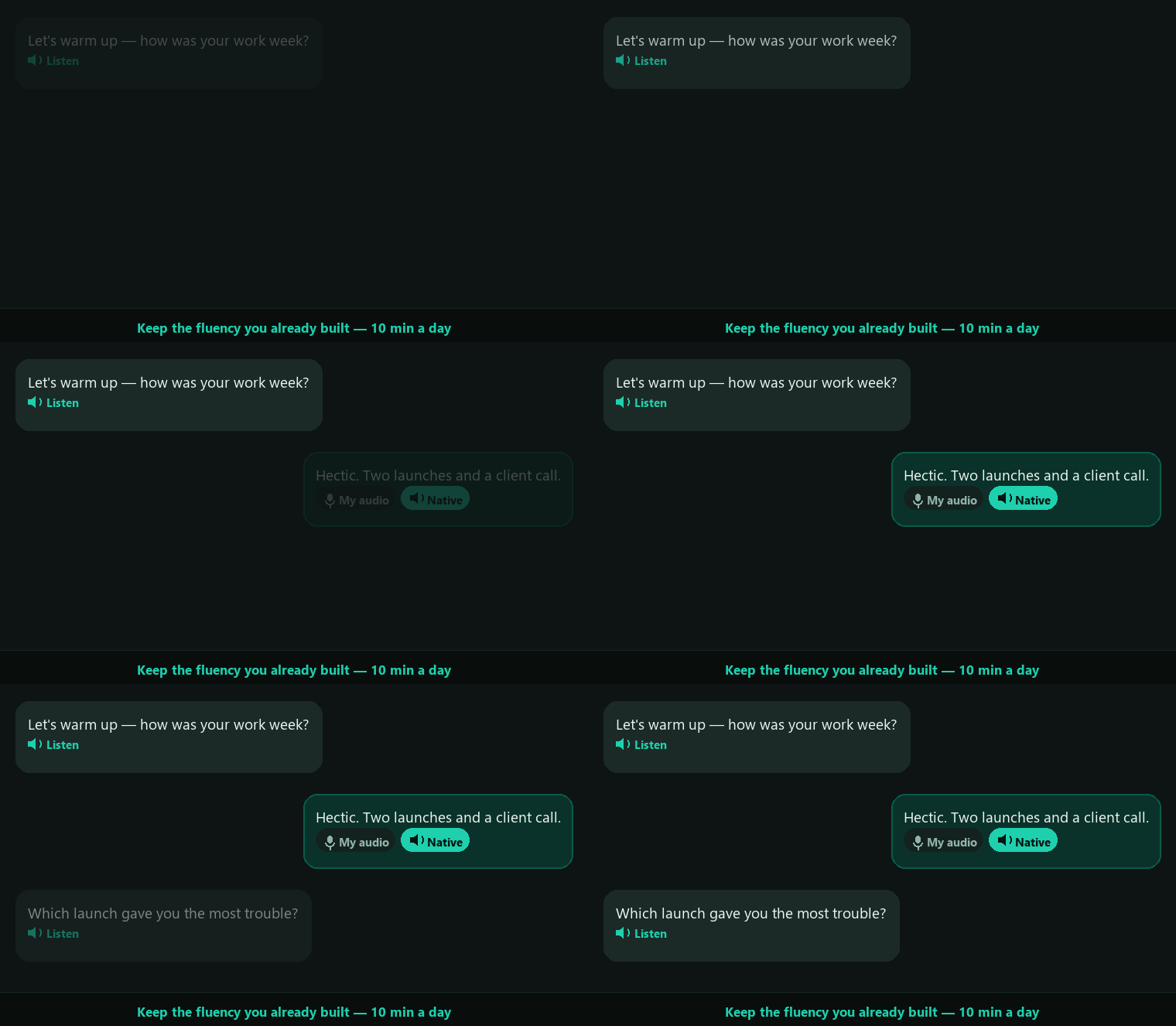
A maintenance routine for people who already speak
This isn’t a study plan. It’s upkeep — designed to fit into a working week without feeling like homework.
1. Speak out loud daily — even briefly
Ten minutes, every day, beats an hour once a week. You’re maintaining a reflex, and reflexes respond to frequency. Talk about work, the news, an argument you had — content doesn’t matter, retrieval practice does.
2. Push into your actual vocabulary
The trap at your level is comfort: you can hold a conversation with a small, safe set of words, so the rest quietly rusts. Deliberately go somewhere harder — explain your job in detail, argue a position, describe something abstract. Make yourself reach.
3. Train the ear at full speed
Turn the subtitles off sometimes. Listen to native speech at natural, un-slowed pace — podcasts, unscripted interviews, real conversation. Slow, clear “learner English” keeps you comfortable while your real-world listening quietly slips.
4. Rehearse before it counts
Big call, interview, conference or trip coming up? Speak English every day for the week before. It won’t teach you anything new — it wakes up retrieval, so you show up sounding like the version of yourself you remember.
The practical problem: who do you speak to?
This is where most maintenance plans die. You don’t need lessons — you’re past that — you just need someone to talk to, regularly, without scheduling a tutor or booking a class you don’t really need.
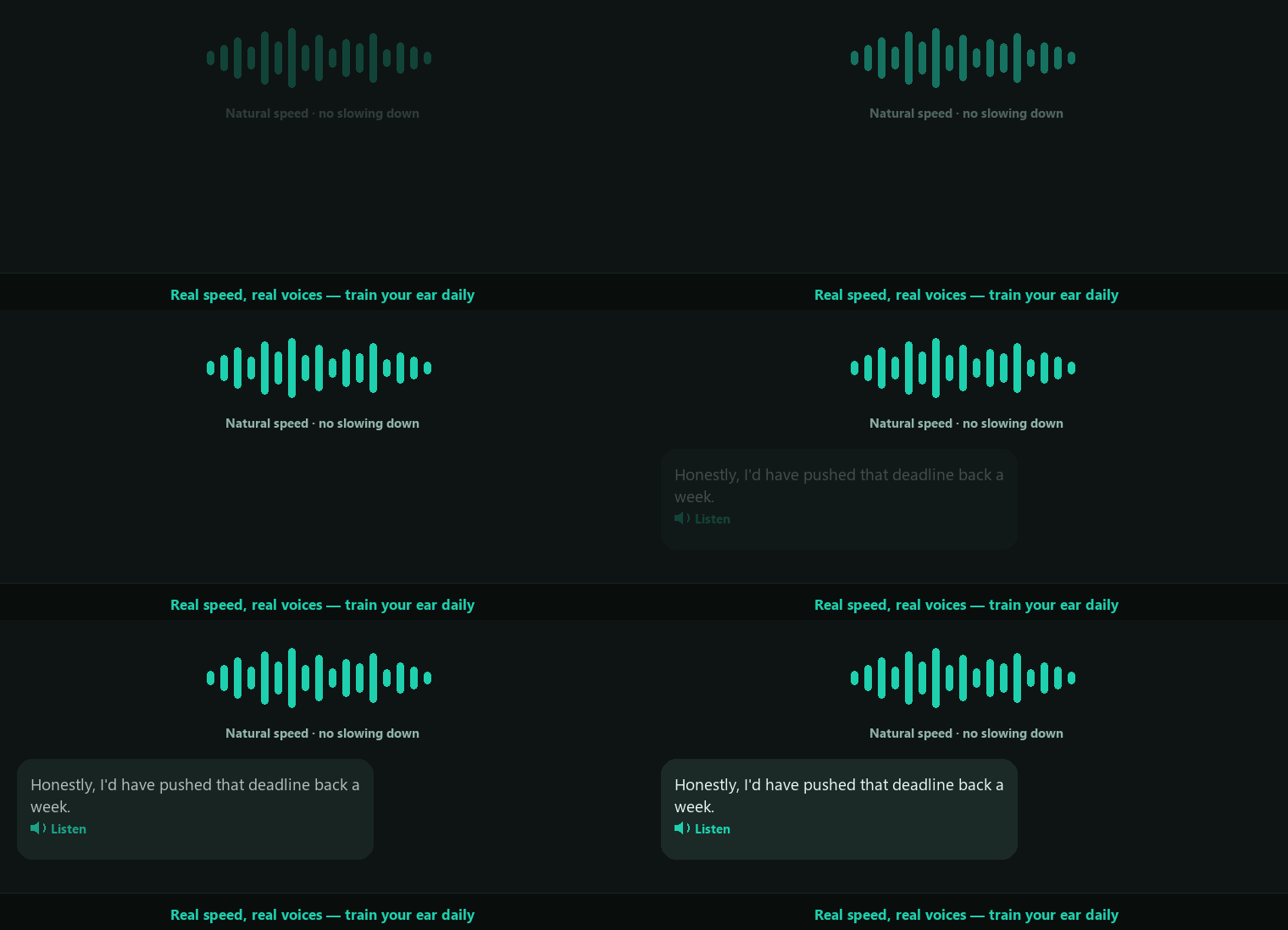
That’s the gap Velivox fills for people who already speak English. It’s a conversation, not a course: you talk out loud, it replies in a natural US or UK voice at real speed, and it follows you into work topics, opinions and idioms rather than beginner scripts. No lesson to choose, no level test, no calendar. Ten minutes in the car or the kitchen and your English stays where you left it.
Keeping English from getting rusty: the short version
- You don’t lose the language — you lose retrieval speed, automaticity and mouth fluency.
- Writing and reading English at work doesn’t maintain speaking. Only speaking does.
- Maintenance is cheap: 10 minutes a day, and rust comes off faster than it formed.
- Push past your comfortable vocabulary and listen at full native speed.
You already did the hard part. Ten minutes a day keeps it — no lessons, no scheduling.
Free to start · No account · Android & iOS