How Much Speaking Practice Do You Need to Become Fluent?
Everyone wants a number. How many hours until I can just talk? And the internet is happy to supply one — 600 hours, 1,000 hours, 10,000 hours, three months if you buy the course.
Here’s the honest answer about how to become fluent speaking English: the hour counts are mostly the wrong question, and the people asking it are usually much closer than they think. Let’s go through what those numbers actually measure, why they mislead, and what amount of daily practice genuinely changes things.
First, what do you mean by “fluent”?
Most disappointment comes from an unspoken definition. People picture native-level — jokes, slang, zero accent, never searching for a word — and measure themselves against that forever.
That’s not what fluency means. Fluency is the ability to communicate comfortably and continuously, without long pauses or panic. Fluent speakers still make mistakes, still have accents, still occasionally forget words — in their native language too.
Pick the honest target and the goal stops being a mirage:
| What you want | What it actually takes |
|---|---|
| Survive abroad — hotels, restaurants, directions | A few weeks of focused speaking practice. Genuinely. |
| Hold a real conversation — opinions, work, small talk | A few months of daily practice, if you already understand English. |
| Work in English — meetings, calls, presentations | Six months to a couple of years, depending on your starting point. |
| Sound native | Years — and honestly, it isn’t necessary for any of the above. |
Why the famous hour counts mislead
You’ll see two numbers everywhere.
The 10,000-hour rule. It came from research on elite performers — concert violinists, chess masters — and even the original author has objected to how it’s applied. It describes world-class mastery, not being able to order dinner or run a meeting. It has almost nothing to do with your situation.
The 600-hour estimate. Institutions that train diplomats publish rough hour ranges per language, and English usually lands somewhere in the several-hundred-hours band for speakers of related languages. But that’s full-time classroom instruction from zero, aiming at professional working proficiency in reading, writing, listening and speaking.
You’re not starting from zero. You’ve probably already invested hundreds of hours in input over the years. The specific thing you’re missing — spoken output — is a much smaller job than the headline number suggests.
Hours are the wrong metric anyway
Two people can log the same 100 hours and end up in completely different places, because what you do with the time matters far more than the total.
- 100 hours of tapping answers → bigger vocabulary, same freeze.
- 100 hours of watching series → excellent comprehension, still can’t produce.
- 100 hours of actually speaking → noticeably fluent conversation.
Same clock, three different outcomes. Which is why the useful question isn’t “how many hours?” but “how many hours of the right thing?” — and for speaking, the right thing is speaking.
Frequency beats duration — every time
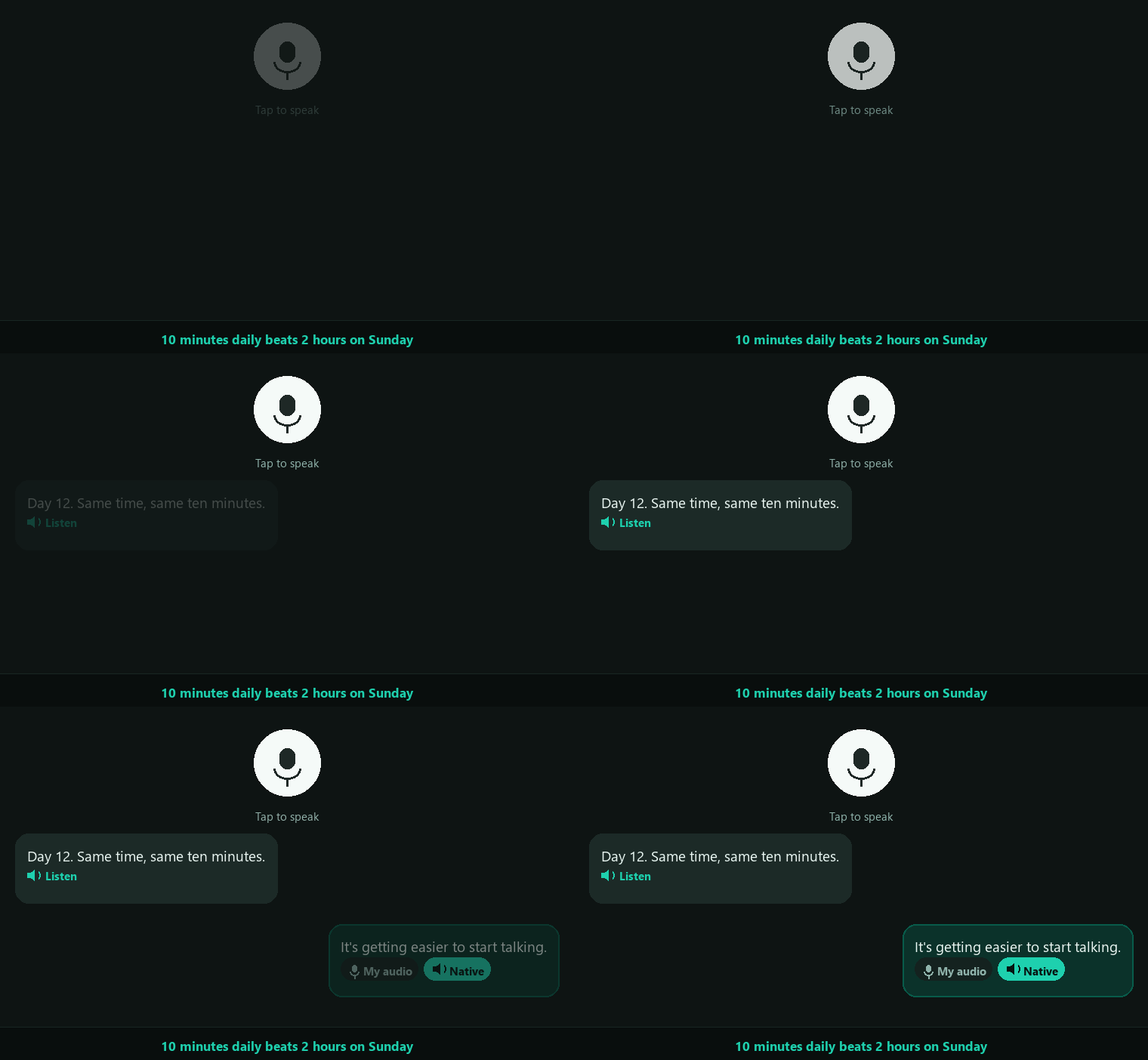
This is the single most useful thing on this page. 10 minutes a day beats 2 hours on Sunday, even though the weekly total is lower.
Speaking is a motor skill wrapped around a memory problem, and both consolidate through repeated, spaced exposure — not through marathons. A daily 10-minute session gives your brain seven separate chances to strengthen retrieval. A single long session gives it one, most of which you’ll be too tired to absorb.
There’s a second, quieter benefit: daily practice never lets the “restart cost” build up. Skip two weeks and the first session back is spent shaking off rust instead of making progress.
What actually happens, week by week
Assuming you already understand English reasonably well and you speak out loud for about 10 minutes a day, here’s the realistic shape of progress:
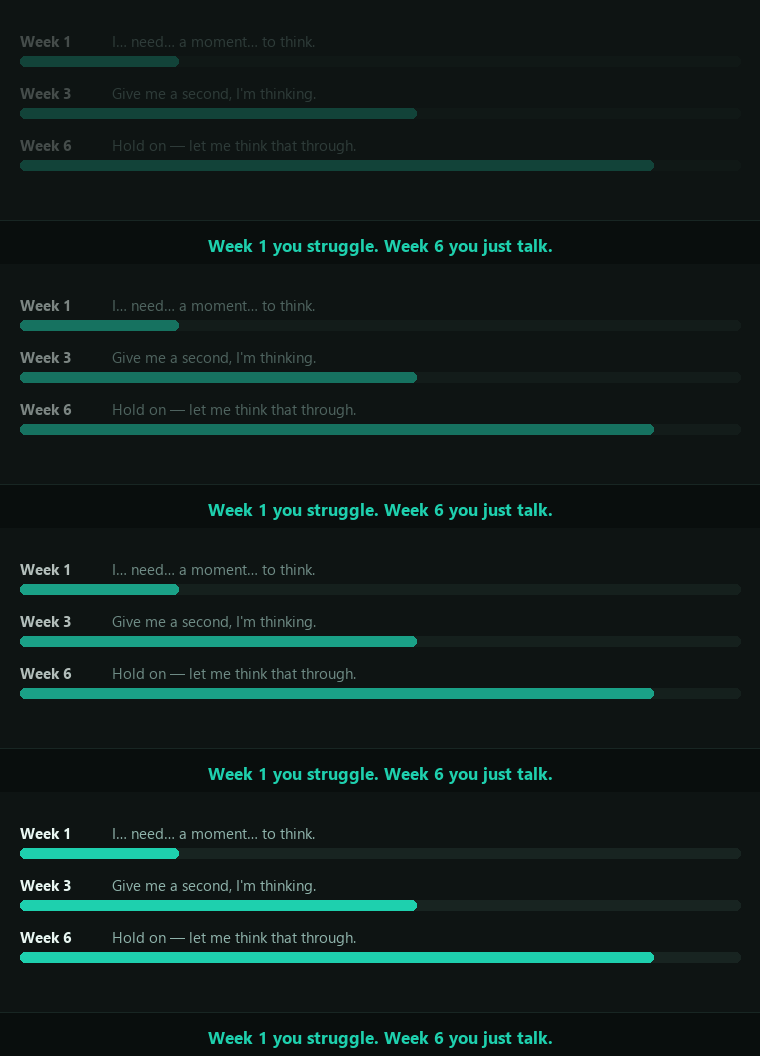
- Week 1–2: Uncomfortable. You’ll be shocked at how hard it is to say things you clearly understand. This is normal — it’s the gap becoming visible, not proof you’re bad.
- Week 3–4: The first real shift. Sentences start arriving without being assembled piece by piece. Pauses get shorter.
- Month 2–3: Speaking stops feeling like a performance. You catch yourself talking for a minute without monitoring yourself.
- Month 4–6: Comfortable conversation. Not perfect — you’ll still miss words — but the panic is gone, which is the part that was actually stopping you.
Notice how early the meaningful change arrives. Most people quit in weeks 1–2, during the uncomfortable phase, and conclude they “can’t learn to speak.” They were two weeks from the shift.
The only number that matters
Forget the total. Track one thing instead: days in a row you spoke English out loud. Not studied. Not watched. Spoke.
That’s the metric that predicts fluency, because it’s the only one measuring the skill you actually want. And it’s achievable regardless of your schedule — ten minutes exists in every day, even a bad one.
Making those ten minutes frictionless is most of the battle, which is what Velivox is designed for: open the app, start talking, an AI answers in a natural voice and corrects you gently in your own language. No lesson to pick, no partner to arrange, no scheduling — so the daily habit survives the days you don’t feel like it.
How much practice you need: the short version
- Define fluency as comfortable communication, not sounding native.
- The 10,000- and 600-hour figures measure different things than what you need.
- Hours of the right activity matter — for speaking, that means speaking.
- 10 minutes daily beats 2 hours weekly. The shift usually comes in weeks 3–4.
Day one starts whenever you decide. Ten minutes, out loud — that’s the whole method.
Free to start · No account · Android & iOS