How to Overcome the Fear of Speaking English
You know the feeling. A colleague switches to English on a call and your heart rate jumps. A tourist asks you for directions and you point instead of answering. You had the sentence ready — you just didn’t say it.
The fear of speaking English is one of the most common reasons capable learners stay stuck for years. And here’s the part almost nobody tells you: it’s not a personality flaw, and it has very little to do with how much English you know.
It’s a loop. Once you see the loop clearly, you can break it — and you can start breaking it today, somewhere nobody can hear you.
The avoidance loop
Fear of speaking works like this:
You’re afraid of sounding stupid → so you avoid speaking → so you get no practice → so you don’t improve → so the next time feels even riskier → you’re more afraid.
Every time you dodge a chance to speak, the fear gets a small confirmation that speaking is dangerous. Meanwhile the skill that would make it feel safe — actual speaking practice — never gets built.
That’s why the fear can grow while your English improves. You keep learning, but you never gather evidence that you can survive a real conversation.
Why “just be confident” never works
People love giving this advice, and it’s useless — because confidence isn’t a decision. Confidence is a memory of having done something and survived it. You can’t feel confident about a thing you’ve never done.
Which means the order most people assume is backwards. You don’t get confident and then speak. You speak, badly, a few dozen times — and confidence shows up afterwards as a side effect.
So the real question isn’t “how do I stop being afraid?” It’s “where can I speak enough times that my brain stops treating it as a threat?”
The fear isn’t really about English
Notice what you’re actually afraid of. Not grammar. Not vocabulary. You’re afraid of the audience: of being judged, of someone’s face changing, of sounding less intelligent than you are in your own language.
That last one matters more than people admit. In your native language you’re witty, precise, competent. In English you sound like a simplified version of yourself — and that gap is genuinely uncomfortable. It’s not vanity; it’s identity.
Which is excellent news, strategically. If the fear is about being watched, then removing the audience removes most of the fear — instantly, without any inner work.
How to break the loop, step by step
You break an avoidance loop by making the feared thing small, safe and repeatable — then slowly turning the difficulty back up. Four steps, in order.
1. Start where there’s no audience
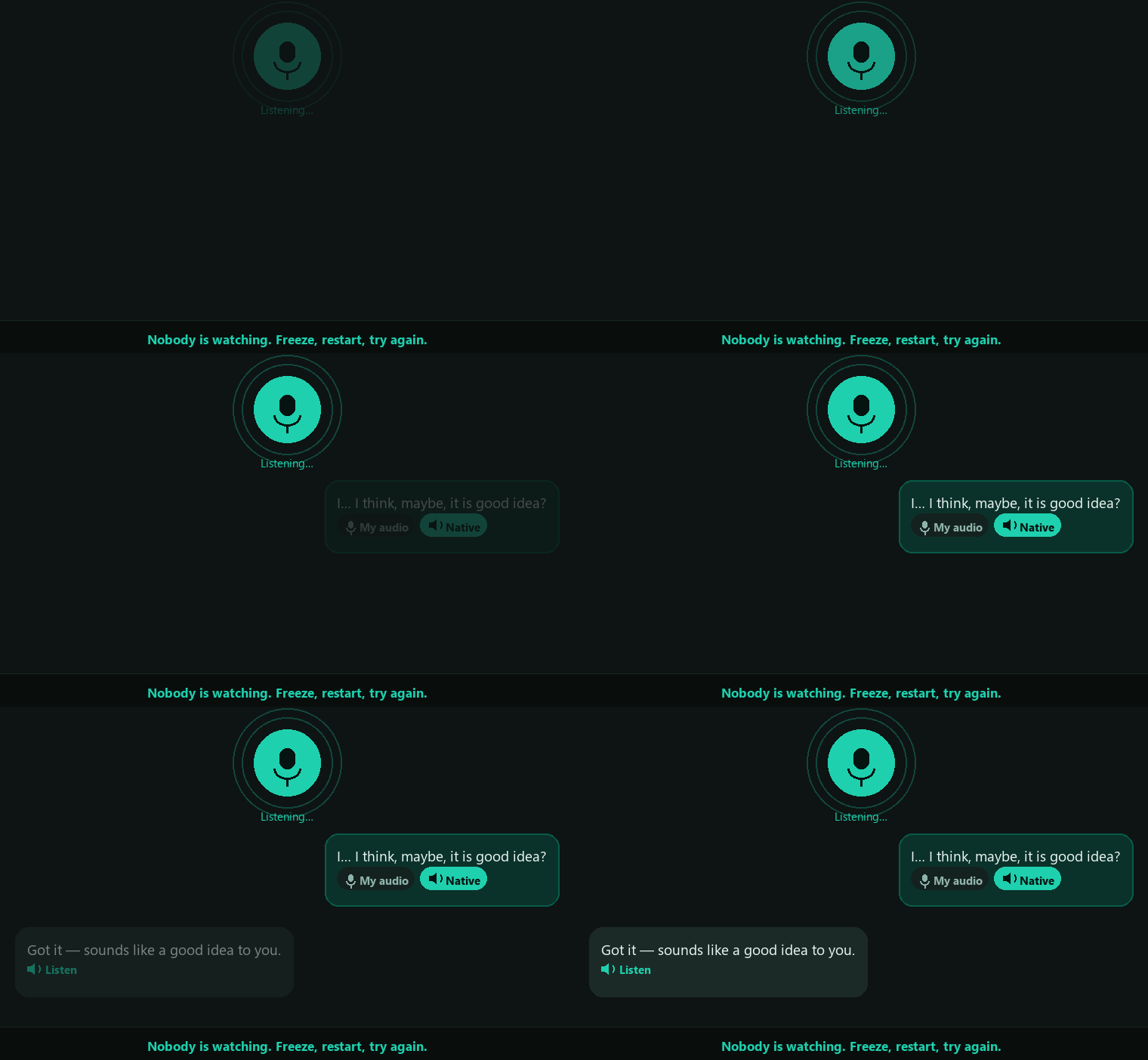
Speak out loud alone: to yourself, to a recording, to an AI. It sounds trivial and it is the single highest-leverage step, because it gets you reps at nearly zero emotional cost. Mistakes here are free.
2. Aim for volume, not perfection
Your goal for the first month isn’t beautiful English. It’s quantity of sentences said out loud. Try to make a hundred mistakes on purpose. Each one you survive is a data point telling your brain this isn’t dangerous.
3. Get correction that doesn’t sting
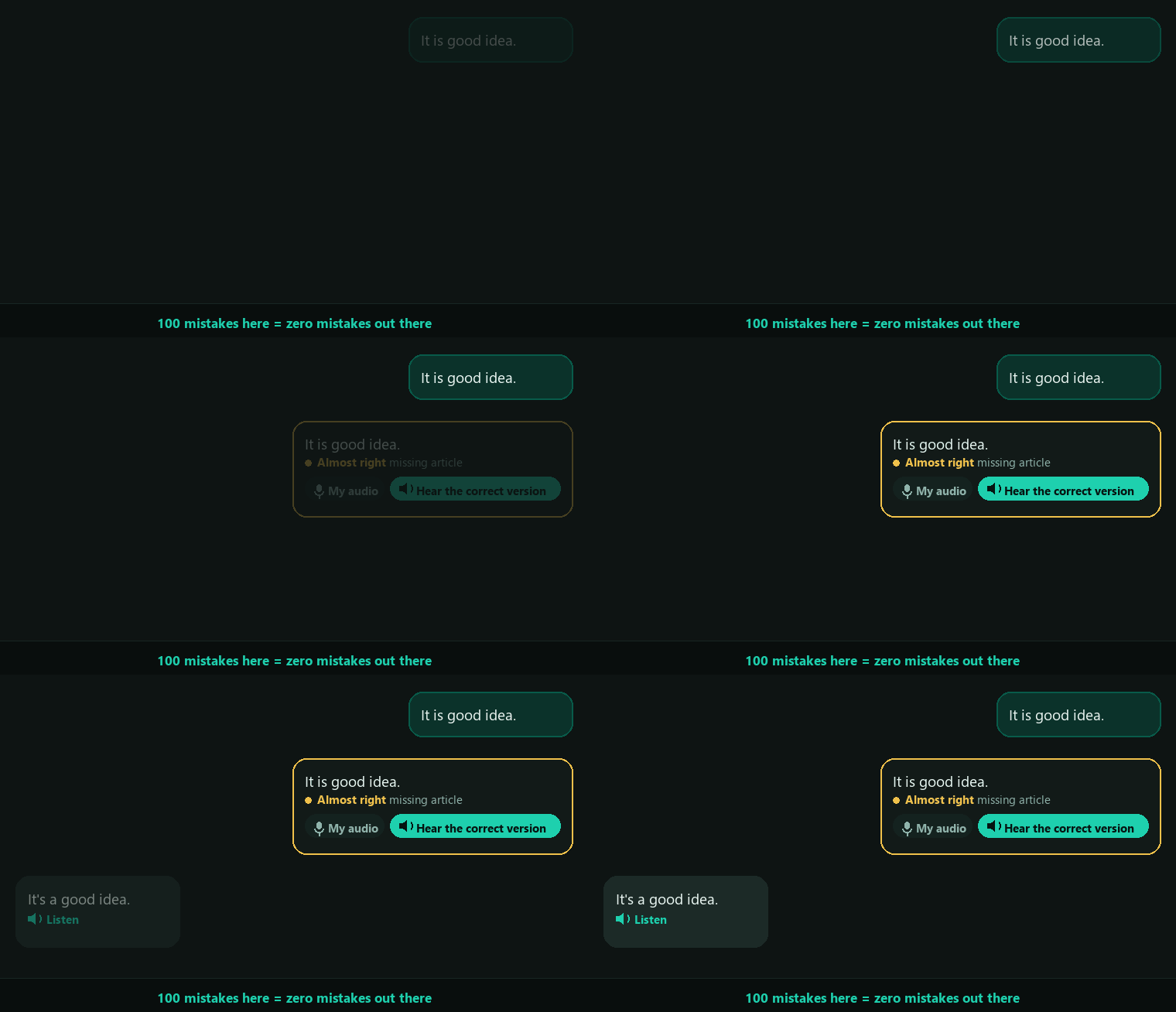
Harsh correction feeds the fear; no correction leaves mistakes fossilised. What works is quiet, immediate feedback — what to fix, why, and the natural way to say it — with nobody’s opinion attached.
4. Add pressure gradually
Once private speaking feels routine, step up: a voice message to a friend, a short call, a low-stakes conversation with a stranger. You’re not jumping into the deep end — you’re raising difficulty on a skill you’ve already practised.
Make your mistakes where no one is watching
This is the whole strategy in one line. You need hundreds of imperfect sentences before the good ones arrive. Say them somewhere the cost is zero, and by the time a real conversation happens, it isn’t your first attempt — it’s your five-hundredth.
That’s what Velivox was built for: an AI English tutor you talk to out loud. There’s no audience, no score, no one to disappoint — just a patient partner that replies in a natural voice, follows any topic you choose, and corrects you gently in your own language. Freeze, restart, mangle a sentence and try again. Nobody will ever know, and that’s exactly the point.
Fear of speaking English: the short version
- The fear is an avoidance loop: fear → avoid → no practice → no progress → more fear.
- Confidence comes after doing it, not before — it’s a memory of surviving, not a decision.
- You’re mostly afraid of the audience, not of English — so start without one.
- Chase volume of spoken sentences, get gentle correction, then raise the stakes slowly.
Make your mistakes here — where nobody’s watching — so they don’t happen out there.
Free to start · No account · Android & iOS