How to Practice English Speaking With AI (2026 Guide)
Until recently, if you wanted to practise speaking English you had exactly three options: find a native-speaker friend, pay a tutor, or talk to yourself in the mirror. Most people ended up with the mirror — or with nothing.
That changed. You can now practice English speaking with AI that listens, understands you and answers out loud in real time — for a fraction of a tutor’s price, at any hour, with no scheduling and no judgment.
But “AI” is doing a lot of work in that sentence. Some tools genuinely build your speaking; others just wrap the same old exercises in a new label. This guide covers what actually matters, how to spot the difference, and a simple daily routine that works.
Why AI is genuinely good at this one thing
Speaking practice has always had a supply problem: it needs a patient partner, available often, who doesn’t get bored or make you feel stupid. Humans are wonderful and in short supply. This is the rare case where a machine isn’t a compromise — it’s a better fit for the job.
- Infinite patience. Repeat the same sentence ten times, pause for twenty seconds, restart mid-thought. It never sighs.
- Zero social cost. No face reacting to your mistakes — which removes most of the fear that stops people speaking at all.
- Always available. Practice happens in the gaps: commute, kitchen, ten minutes before bed. No calendar involved.
- Affordable enough to be daily. Fluency needs frequency, and frequency needs a price you don’t think about.
None of this replaces real human conversation. It’s what gets you ready for it — the reps you can’t otherwise get.
What to look for in an AI speaking tool
Judge any tool on these five things. They’re the difference between practice that transfers to real life and practice that just feels productive.
1. You speak out loud — not type
Sounds obvious, but plenty of “AI tutors” are text chatbots. Typing trains writing. If your mouth isn’t moving, your speaking isn’t improving.
2. It replies in a real voice, fast
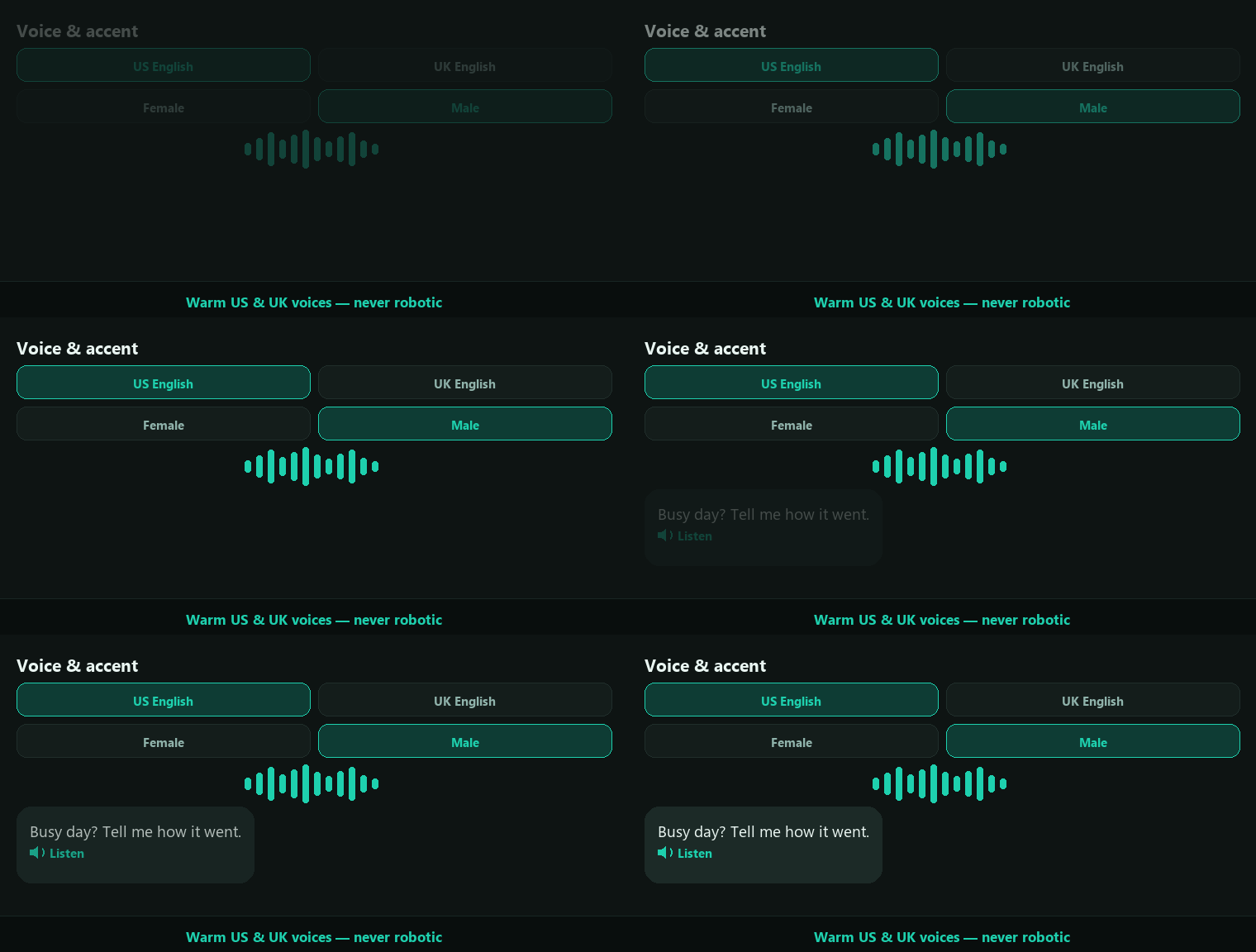
Two parts matter here. Voice quality: robotic text-to-speech teaches you to understand robots, not people — you want natural, expressive speech at normal conversational pace. Latency: if a reply takes five seconds, it stops being a conversation. Around a second keeps the rhythm alive.
3. The conversation is open-ended
Scripted lessons collapse the moment you go off-script — and real conversations are nothing but off-script. Test it: change the subject abruptly, ask something unrelated, give an opinion. A good tool follows you anywhere; a weak one drags you back to its lesson plan.
4. Feedback is gentle and in your language
You need to know what you got wrong — but delivered so it doesn’t discourage you, and explained in a language you fully understand. Grammar notes in English you’re still learning help nobody. Hearing the natural version of your own sentence is worth more than a rule.
5. It adapts to your level
Too hard and you shut down; too easy and you coast. The conversation should meet you where you are — simple sentences for a beginner, idioms and fast back-and-forth for someone advanced — without a placement test to get started.
What to avoid
- Multiple-choice dressed as AI. If you’re tapping options, it’s the old model with a new name.
- Repeat-after-me drills only. Copying a fixed sentence trains pronunciation, not conversation.
- Robotic voices. They make listening practice actively misleading.
- Harsh scoring. A pronunciation percentage after every sentence rebuilds exactly the fear you’re trying to escape.
A 10-minute daily routine that works
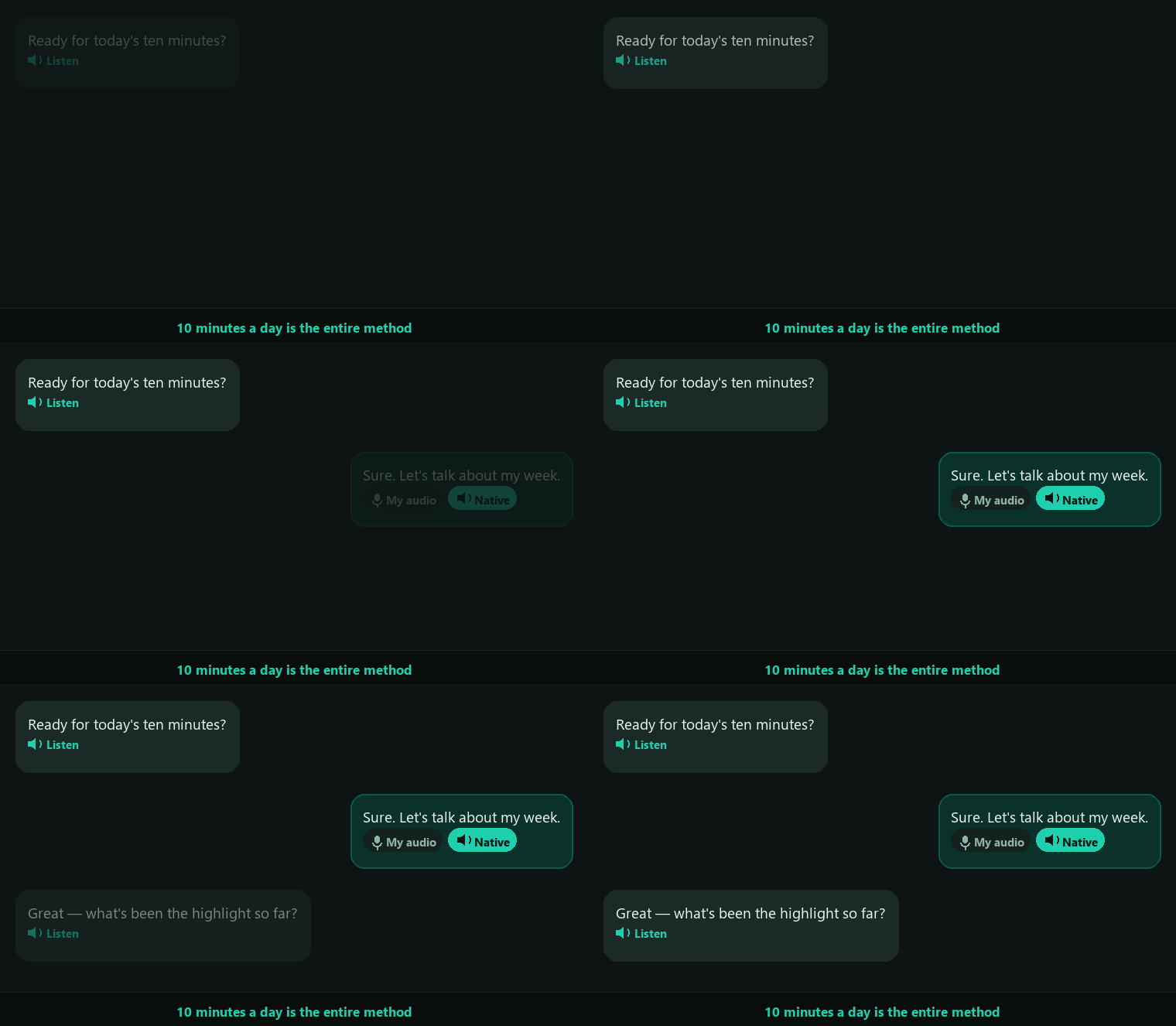
Frequency beats duration. Ten minutes every day will take you further than two hours on Sunday, because speaking is a motor skill and motor skills consolidate with repetition, not marathons. Here’s a routine that fits in a coffee break:
- Minutes 1–2 — Warm up. Describe your day out loud. No pressure, no topic to choose. Just get your mouth moving in English.
- Minutes 3–7 — Real conversation. Pick something you actually have opinions about. Let it go off-script. This is the part that builds fluency.
- Minutes 8–9 — Fix one thing. Look at the corrections, choose a single mistake, and say the natural version out loud three times.
- Minute 10 — Rehearse reality. Practise a situation you’ll genuinely face: a work call, ordering something, small talk. Future-you will thank present-you.
Do that most days for a month and the change is unmistakable — not because your grammar improved, but because retrieval got fast enough to keep up with a live conversation.
Try it today
Whichever tool you choose, run it through the five checks above before you commit: do you speak out loud, does it answer in a natural voice quickly, does it follow you off-script, is the feedback kind and in your language, and does it meet your level?
We built Velivox around exactly those five. You talk out loud, it replies in a warm US or UK voice in about a second, the conversation goes wherever you take it, corrections arrive gently in your own language, and it adapts from beginner to advanced automatically. There’s a free tier, no account to create, and it runs on Android and iOS — so the ten minutes can happen wherever you are.
Practising English speaking with AI: the short version
- AI solves the hardest part of speaking practice: a patient partner, always available, at no social cost.
- Demand five things: speak out loud, fast natural voice, open-ended, gentle feedback in your language, level-adaptive.
- Avoid multiple choice, repeat-after-me drills, robotic voices and harsh scoring.
- Ten minutes daily beats two hours weekly — frequency builds the reflex.
Ten minutes today. Speak out loud, get a real voice back — and start building the reflex.
Free to start · No account · Android & iOS