Travel English: 25 Phrases You’ll Actually Use Abroad
Textbook travel English is a strange language. Nobody says “Excuse me, could you kindly indicate the location of the railway station?” Real travellers say “Sorry — is this the way to the station?” and get an answer.
These are the travel English phrases that actually come out of people’s mouths abroad — short, natural, and the ones you’ll need in the first hour off the plane. At the end there’s the part most phrasebooks skip, and the part that really saves you: what to say when you don’t understand the reply.
✈️ At the airport
“Is this the line for passport control?”The most useful airport sentence there is. “Line” in the US, “queue” in the UK — both understood everywhere.
“I’m here for two weeks — tourism.”The immigration answer. Short is better than a full explanation; officers ask hundreds of people a day.
“Where can I get a taxi?”Also works for: bus, train, ATM, SIM card. Swap the last word.
“My flight was delayed — what are my options?”Opens the conversation without arguing. Staff respond much better to this than to complaints.
🏨 At the hotel
“I have a reservation under [your name].”Check-in in one sentence. Spell your name slowly — it’s almost always misheard.
“What time is check-out?”Ask on arrival, not on the last morning.
“Could I leave my bags here for a few hours?”Nearly every hotel says yes, even after check-out — but only if you ask.
“The Wi-Fi isn’t working — could you help?”“Isn’t working” is the natural way to report any problem: the shower, the AC, the key card.
🍽️ Restaurants & cafés
“A table for two, please.”That’s the whole sentence. No need for “I would like to request…”
“I’ll have the chicken, please.”How natives order. “I’ll have…” sounds far more natural than “I want…”.
“What do you recommend?”Saves you from a menu you can’t read — and usually gets you something good.
“Does this have nuts in it?”Allergy sentence. Say it clearly and repeat if there’s any doubt.
“Could we get the bill, please?”“Bill” in the UK, “check” in the US. Both work.
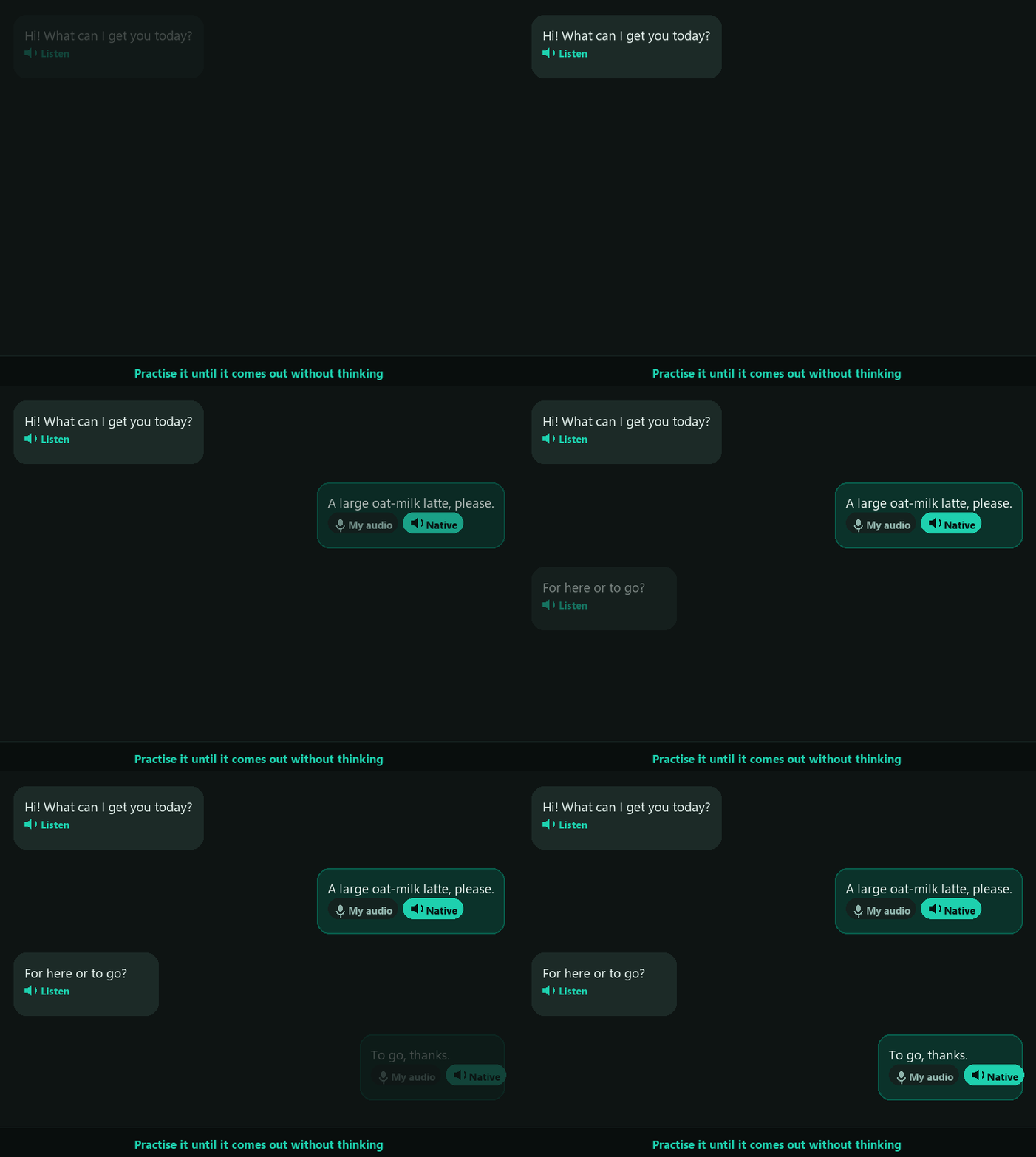
“For here or to go?” — “To go, please.”You’ll be asked this in every café. Knowing the answer keeps you from freezing at the counter.
🚕 Taxis & getting around
“Could you take me to this address?”Then show your phone. Combining a sentence with a screen is a completely legitimate strategy.
“How much is it to the city centre, roughly?”“Roughly” signals you know prices vary — and quietly signals you’re not an easy target.
“Can you stop here, please?”Add “just here” if you want it immediately.
“Does this bus go to the old town?”Ask the driver before boarding. A yes/no question is far easier to understand than directions.
🛍️ Shopping & small problems
“I’m just looking, thanks.”The polite exit from any shop assistant, anywhere in the world.
“Do you take card?”Four words, saves a lot of embarrassment.
“Can I try this on?”Clothes shopping in one sentence.
“I think there’s a mistake with the bill.”Softer than “this is wrong” — and it gets the problem fixed faster.
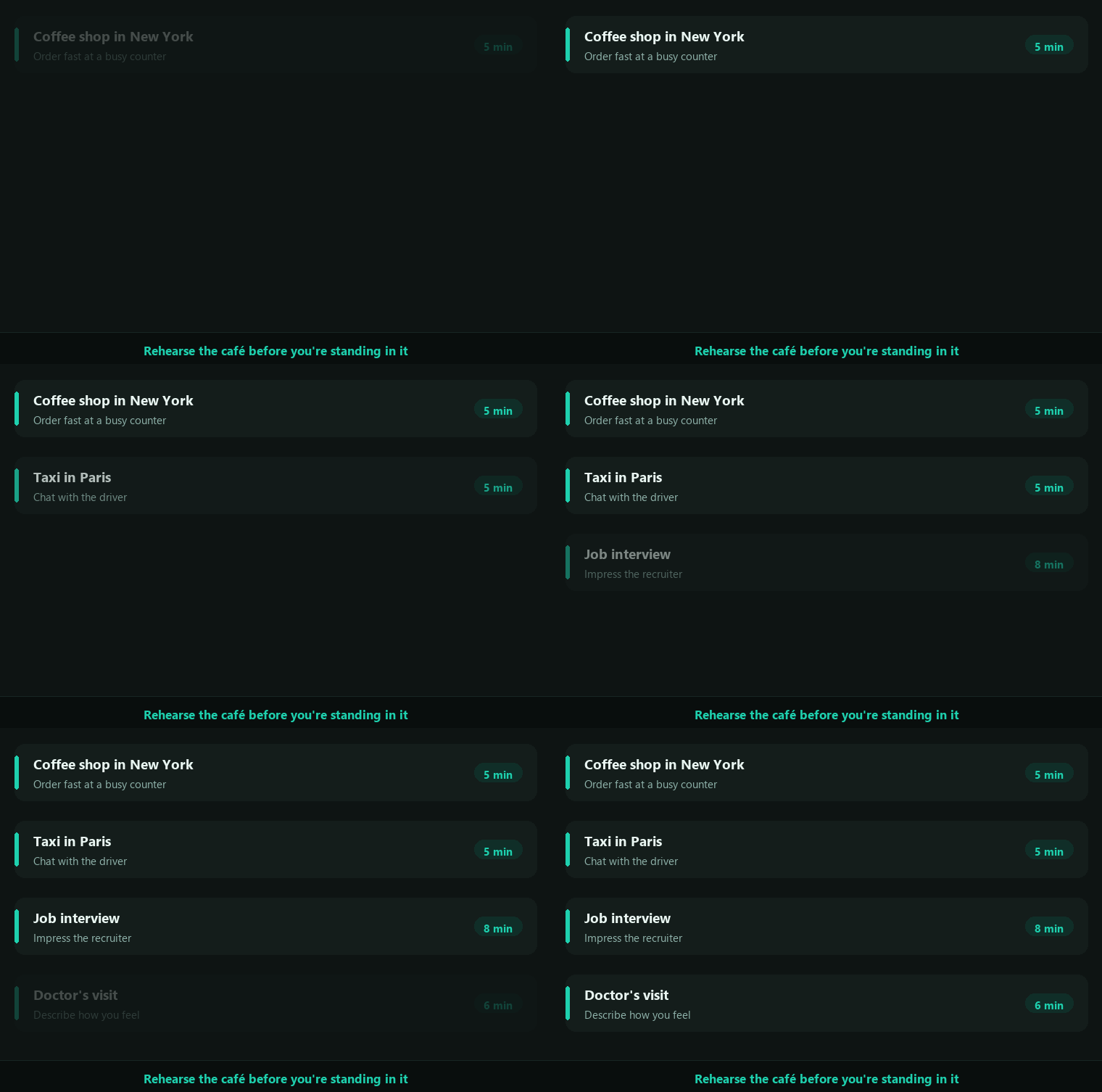
Rehearsing the café before you’re standing in the café.
🆘 When you don’t understand the reply
Here’s what phrasebooks never tell you: saying your sentence is the easy half. You’ll deliver a perfect “Where can I get a taxi?” — and then get a fast, accented answer you don’t catch at all. That’s the moment people panic.
These four phrases are worth more than the other twenty-one combined:
“Sorry, could you say that again?”Universal, polite, and never makes you look bad. Use it as often as you need.
“Could you speak a little slower, please?”People almost always oblige — most just don’t realise how fast they’re talking.
“Sorry, my English isn’t great — can you show me?”Disarms the situation instantly. Nearly everyone becomes helpful, and gestures beat vocabulary.
“So, [repeat what you understood] — is that right?”The pro move. Repeating back what you caught confirms you got it — and lets them correct just the missing part.
Nobody abroad expects perfect English from a visitor. What they notice is whether you try, and whether you handle confusion calmly. These four phrases do all of that work for you.
Reading these isn’t enough
You already know this feeling: you read a phrase list before a trip, nod along — and at the counter your mind goes blank anyway. Recognising a sentence on a page and producing it under pressure are two different skills.
So don’t just read them. Say each one out loud, five times, until it comes out without thinking. Then rehearse the whole situation — the barista’s question, your answer, the follow-up you didn’t expect. That’s what makes them available when you actually need them.
Say it out loud until it’s automatic — including the reply you didn’t expect.
That’s exactly what the role-play scenarios in Velivox are for. You can practise ordering in a New York café, taking a taxi in Paris or checking into a hotel — out loud, with an AI that answers in a natural voice and throws in the follow-up questions real people ask. Ten minutes a day for a week before your trip, and the first hour off the plane stops being the scary part.
Travel English: the short version
Real travel English is short — “I’ll have the chicken,” not a formal request.
The four “I didn’t understand” phrases matter more than any vocabulary list.
Repeating back what you understood is the single best trick for confusing replies.
Say them out loud before you travel — reading a list won’t make them come out under pressure.