Too Easy or Too Hard? How Speaking Practice Should Adapt to Your Level
You open a language app and it asks you to repeat “The cat is on the table.” You’ve read novels in English. You close the app.
Or the opposite: you join a conversation class, everyone speaks faster than you can process, and you spend forty minutes nodding and saying nothing. You don’t come back.
Both are the same failure. Finding English practice at your level is the single most underrated factor in whether you actually improve — and almost nothing on the market gets it right, for a reason most people never notice.
The two ways practice fails you
Difficulty isn’t a minor preference — it decides whether learning happens at all.
Too easy: you coast
Practice below your level feels pleasant and does almost nothing. You repeat structures you mastered years ago, your comfortable little set of words gets a workout, and everything beyond it quietly rusts. Worse, it’s boring — and boring is how habits die.
Too hard: you shut down
Practice far above your level triggers the freeze. Your brain spends everything it has on decoding, leaves nothing for producing, and you go silent. Then you conclude you’re “bad at speaking” — when really you were just handed the wrong difficulty.
The sweet spot is narrow: slightly above what’s comfortable. Hard enough that you have to reach for words; easy enough that you can still keep talking. That’s where speaking actually improves.
Your level isn’t one number
Here’s the part almost nobody says out loud, and it explains why placement tests keep getting you wrong.
You don’t have a level. You have four, and they’re rarely the same:
| Skill | Typical learner who’s studied for years |
|---|---|
| Reading | Often B2–C1 — articles, documentation, novels |
| Listening | B1–B2 — fine with subtitles, struggles at full speed |
| Writing | B1–B2 — slow but accurate, with time to think |
| Speaking | Often A2–B1 — the one that never got trained |
This gap is the whole reason “I understand everything but I can’t speak” is the most common sentence in language learning. And it’s why a single placement test breaks: answer reading questions well and you get labelled B2, then get thrown into B2 conversation — which is far above where your mouth is.
Get labelled by your weakest skill instead and you’re back to “The cat is on the table.” Either way, the label is wrong.
What real adaptation looks like
Proper adaptation doesn’t come from a test at signup. It comes from listening to how you actually speak, right now, and answering at a level you can handle — then nudging it upward.
The clearest way to see it: same topic, three different speakers.
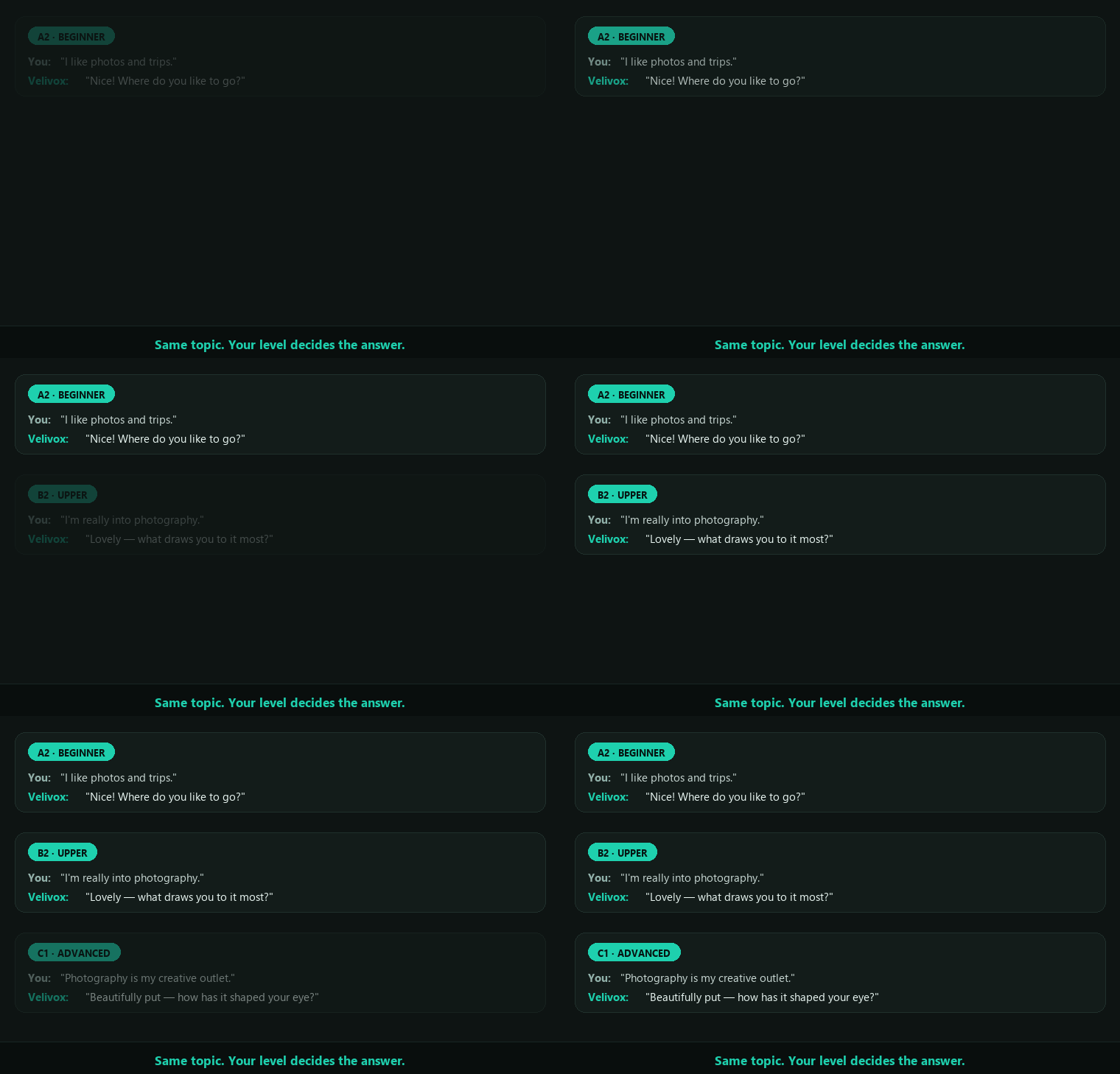
Notice what changes. Not the subject — the shape of the reply: sentence length, vocabulary, how much is assumed, how open the follow-up question is. An A2 speaker gets a short, concrete question they can answer. A C1 speaker gets something worth thinking about.
Both are having a real conversation. Neither is being talked down to or drowned.
It has to move as you move
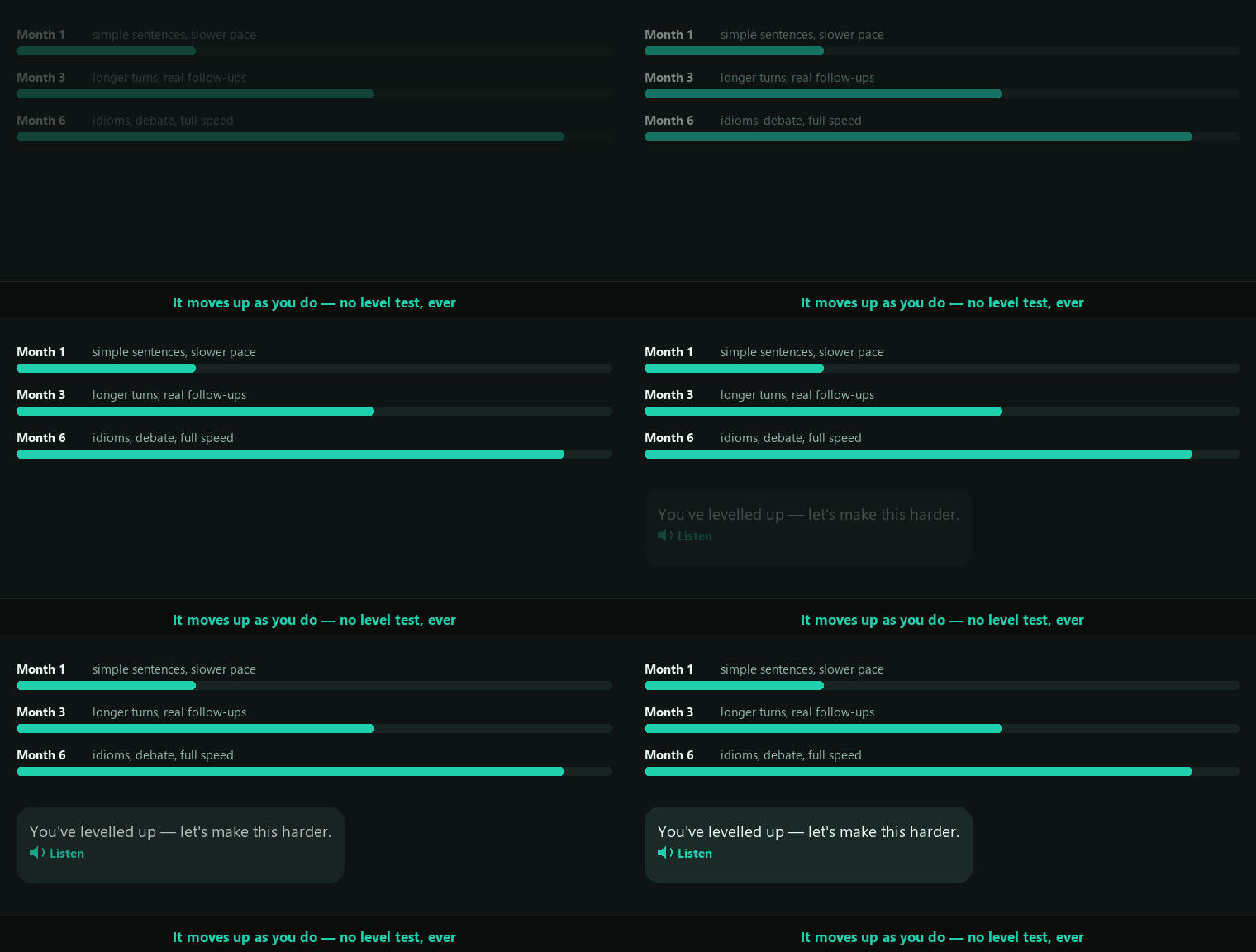
Adapting once isn’t enough. Your speaking changes fast — in weeks, not years — and practice that stays frozen at your starting point becomes the “too easy” problem within a month.
Good adaptation is continuous: as your sentences get longer and your pauses get shorter, the difficulty quietly rises with you. You shouldn’t have to notice it, and you definitely shouldn’t have to re-take a test.
How to test whether a tool actually adapts
Most apps claim to be adaptive. Three quick checks will tell you the truth in five minutes.
- Speak simply on purpose. Use short, broken sentences. Does the reply get simpler and shorter too, or does it keep firing long paragraphs at you?
- Then speak at your best. Use a complex sentence, an opinion, an idiom. Does it rise to meet you — or does it stay in beginner mode?
- Check the entry point. If it demanded a placement test before you could speak a word, it’s labelling you, not listening to you.
A tool that passes all three will feel like talking to a person who’s paying attention. One that fails will feel like a script that happens to be running near you.
Start wherever you are
The practical upshot: you don’t need to “get good enough” before you start speaking, and you don’t need to hunt for the perfect-level course. You need practice that reads your actual speaking and answers accordingly.
That’s how Velivox is built. There’s no level test and no level to pick — you just start talking, and the conversation meets you: simple, concrete replies if your sentences are short; idioms, debate and full-speed back-and-forth if they aren’t. From A0 to C1, in the same app, with the difficulty moving as you do.
If freezing is your main obstacle, start with why you freeze when speaking English. If it’s not having anyone to talk to, see no one to practice English with.
Practice at your level: the short version
- Too easy = you coast and get bored. Too hard = you freeze and quit. The zone is slightly above comfortable.
- You don’t have one level — your speaking is usually well below your reading.
- That’s why placement tests mislabel you either way.
- Real adaptation listens to how you speak right now — and rises as you improve.
No level test. No level to pick. Just start talking — it meets you where you are.
Free to start · No account · Android & iOS