
How to Improve Your Spoken English at Home

You don’t need to move abroad, join a class, or hire a tutor to speak better English. Nearly everything that builds speaking can be done from your kitchen — and most of it in ten minutes a day.
The catch is that most “study at home” advice quietly trains the wrong thing. This guide covers what genuinely works to improve English speaking at home, the popular habits that waste your time, and a simple weekly plan you can start today.
The rule that decides everything
One principle explains why some people improve fast at home and others plateau for years:
You get better at exactly what you practise — and almost nothing else.
Reading builds reading. Listening builds listening. Speaking is built by speaking out loud — no other activity substitutes for it, no matter how much English it involves.
That’s why someone can watch English series every evening for two years, understand nearly everything, and still freeze when asked a simple question. (We unpack that in detail in why you freeze when speaking English.)
What actually works at home
Five things, roughly in order of impact.
1. Have real conversations out loud
The highest-value activity by a wide margin — and the one most home study skips, because it’s the only one that traditionally needed another person. It doesn’t any more: you can have an unscripted conversation with an AI, out loud, whenever you want. Everything below is a supplement to this.
2. Narrate your day
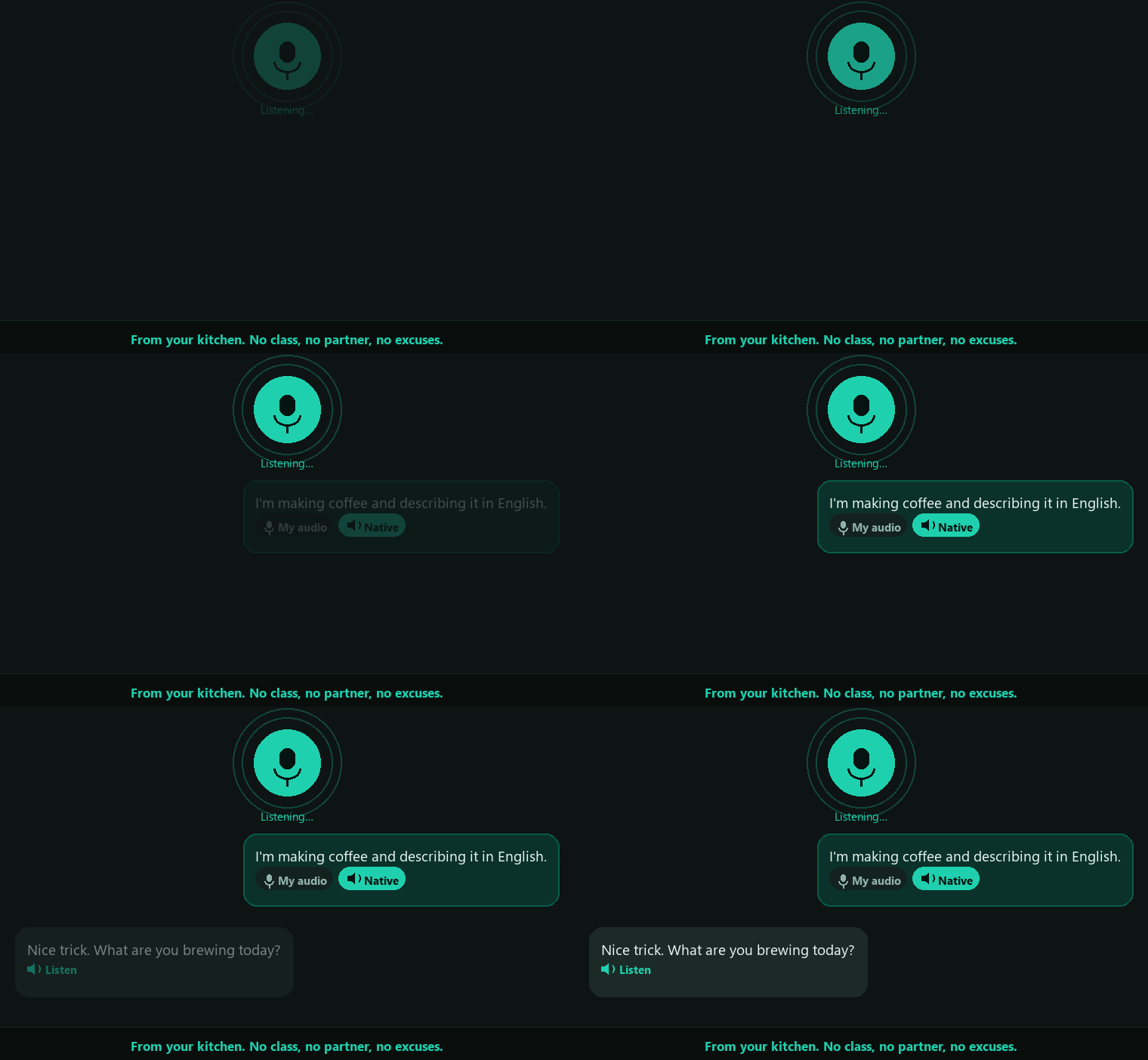
Cooking, cleaning, walking? Describe it in English out loud. It feels silly for about two days, then it becomes the easiest way to add speaking reps to time you were spending anyway. No preparation, no equipment, no audience.
3. Shadow native audio
Play a clip of natural speech and repeat it a beat behind the speaker, copying the rhythm and melody rather than individual words. Five minutes a few times a week does more for pronunciation and flow than any amount of reading phonetic rules.
4. Record yourself, then listen back
Speak for two minutes on any topic and play it back. It’s uncomfortable and unusually effective: you’ll hear filler words, hesitations and pronunciation habits that are invisible while you’re speaking. Do it once a week, not daily — it’s diagnosis, not training.
5. Rehearse situations you’ll actually face
A work call, a job interview, ordering in a café abroad. Practising the specific conversation you’re dreading turns it from a first attempt into a repeat performance — which is the entire difference between panic and calm.
What wastes your time
These aren’t useless — they’re just misfiled. People do them instead of speaking practice and wonder why speaking doesn’t improve.
| Activity | What it actually builds |
|---|---|
| Watching series with subtitles | Comprehension and vocabulary. Zero speaking. |
| Memorising word lists | Recognition — you’ll know the word when you see it, not retrieve it when you need it. |
| Grammar exercises | Test scores. Rules you can recite rarely reach real-time speech. |
| Tap-to-answer apps | Vocabulary and habit — but the thumb does the work, not the mouth. |
| Reading aloud from a book | Pronunciation only. You’re not composing, so retrieval never trains. |
Keep them as seasoning. Just don’t mistake them for the main course.
A weekly plan you can actually keep
Around 15 minutes a day, no class, no partner, no equipment beyond your phone.
- Every day (10 min): a real conversation out loud. Unscripted, any topic, mistakes allowed. This is non-negotiable — everything else is optional.
- Mon / Wed / Fri (5 min): shadowing. Same clip all week is fine — repetition is the point.
- Tue / Thu (5 min): narrate something you’re doing. Cooking, tidying, walking to the shop.
- Sunday (10 min): record two minutes, listen back, pick one thing to fix next week. One, not five.
If you only manage the daily line, you’ll still improve. If you skip the daily line and do everything else perfectly, you won’t.
Three mistakes that stall people at home
- Waiting to feel ready. “I’ll start speaking once my grammar is better” is the most expensive sentence in language learning. You’ll never feel ready — readiness comes from doing it badly first.
- Practising silently. Thinking a sentence and saying it are different acts. If your mouth isn’t moving, it doesn’t count.
- Chasing perfection over volume. Fifty imperfect sentences teach you more than five careful ones. Speed of improvement tracks quantity, not polish.
The only hard part
Everything above is free or nearly free — except the daily conversation, which historically required a person. That’s the reason most home learners end up with a plan full of input and no speaking in it.
That’s the gap Velivox closes. You speak out loud, an AI understands you and replies in a natural US or UK voice in about a second, and it corrects you gently in your own language. No partner to find, no lesson to book, no one judging your mistakes — so the ten minutes actually happen, every day, at home.
If you want more on the solo options, we compare all of them in no one to practice English with, and cover realistic timelines in how much practice you need to become fluent.
Improving spoken English at home: the short version
- You improve at exactly what you practise — speaking requires speaking out loud.
- Best at home: real conversation, narrating your day, shadowing, self-recording, rehearsing real situations.
- Series, word lists and grammar drills build other skills — keep them, don’t rely on them.
- Around 15 minutes a day, with a daily out-loud conversation as the non-negotiable core.
Everything else is optional. Start the daily ten minutes — right where you are.
Free to start · No account · Android & iOS